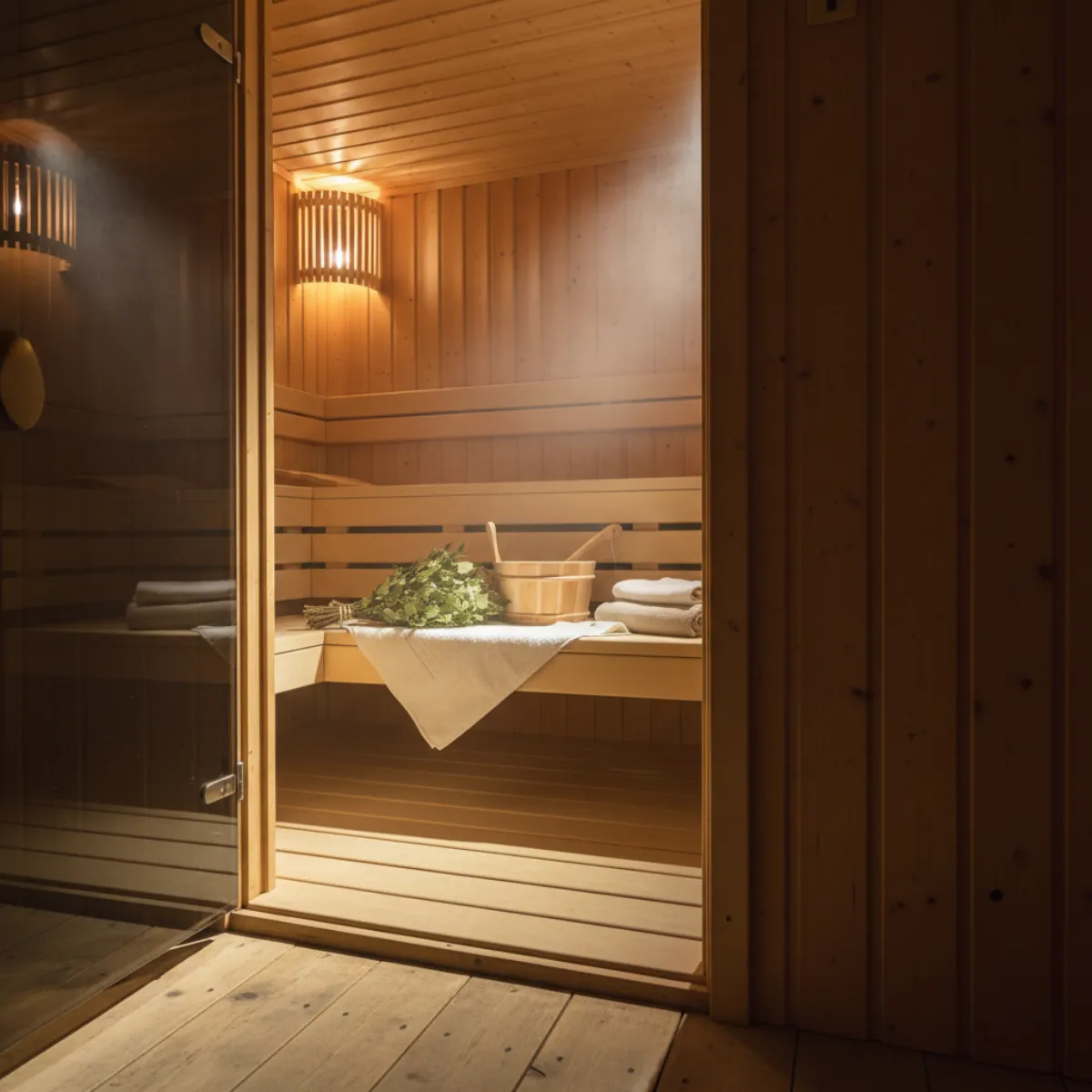
Sauna for Beginners: What to Expect and How to Start
New to sauna? This beginner's guide covers what it feels like, how long to stay, what to bring, etiquette basics, and how to build a routine that sticks.
Quick answer: Start your first sauna session at 150 to 160 F for 10 to 15 minutes on the lower bench, and leave earlier if you want to. Bring a towel to sit on, a water bottle, and sandals, and always shower before entering. Drink 16 to 20 ounces of water in the hour before and at least as much after. One to two sessions per week is a solid starting point, and Finnish research suggests frequency matters more than duration or extreme heat.
Best for
Complete beginners who have never used a sauna and want to know what it feels like, what to bring, and how to build a routine.
Wrong fit
Experienced sauna users looking for advanced protocols, or anyone with a fever, pregnancy, or uncontrolled blood pressure who needs medical clearance first.
Tradeoff
Longer and hotter is not better. A comfortable 10-minute session you repeat every week beats a 30-minute endurance test you never want to repeat.
The door closes behind you. The air is dry, warm, and still. Within seconds your skin starts to tingle. A minute in, a thin layer of sweat appears on your forearms. Your shoulders drop. Your breathing slows. The world outside becomes very, very quiet.
That is what a sauna feels like. Not punishment. Not endurance. Just warmth, stillness, and your body doing what it has done for thousands of years. Sweating.
If you have never been in a sauna before, this guide is for you. No judgment, no prerequisites, no fitness level required. You belong here even if you have never done this before. We will walk through what to expect, what to bring, how long to stay, and how to turn your first session into a practice that keeps giving back.
TL;DR: Sauna Basics for First-Timers
Question
Quick Answer
How hot?
Start at 150-160°F (65-70°C). Work up from there.
How long?
10-15 minutes for your first session. Leave earlier if you want to.
What to bring?
Towel, water bottle, sandals. That is it.
How often?
1-2 times per week is a great starting point.
Shower before?
Yes. Always rinse off before entering.
Phone?
Leave it outside. This is your time.
What a Sauna Actually Feels Like
Most people overthink their first sauna visit. They imagine something extreme. Something painful. The reality is much gentler than that.
When you step inside, the first thing you notice is the warmth on your face. Not sharp, not aggressive. More like standing in the sun on a very hot day, except it surrounds you completely. The wooden benches are warm under your legs. The air smells faintly of cedar or birch, depending on the sauna.
For the first two or three minutes, not much happens. You sit. You breathe. Your body adjusts.
Then the sweat arrives. It starts on your forehead and upper lip. Within five minutes, your whole body is glistening. Your heart rate rises gently, similar to a brisk walk. Your muscles soften. The tension you have been carrying in your neck and shoulders starts to let go.
Around the ten-minute mark, you might notice a deep, pleasant heaviness. Some people describe it as the feeling after a long run, minus the effort. Your body is working. Your mind is not.
That is the whole experience. You sit in warmth, you sweat, you feel your body relax in a way that is hard to replicate anywhere else.
Types of Saunas: A Simple Breakdown
You will encounter three main types. All of them are good. The "best" one is whichever one you have access to.
Traditional (Finnish) Sauna
This is the original. A wood-lined room heated by a stove, either wood-burning or electric, with stones on top. The air is dry (10-20% humidity) unless you pour water on the stones, which creates a burst of steam called "loyly." Temperatures range from 150°F to 200°F (65-95°C).
This is what most people picture when they hear "sauna." It is the most common type in gyms, spas, and wellness centers worldwide.
Infrared Sauna
Instead of heating the air, infrared saunas use panels that emit infrared light to warm your body directly. The room temperature stays lower, usually 120-150°F (50-65°C), but you still sweat heavily because the heat penetrates your skin.
Infrared saunas feel gentler. If you are sensitive to high heat or find traditional saunas overwhelming, this is a great starting point. For a deeper comparison, read our infrared vs traditional sauna guide.
Steam Room
Steam rooms use moist heat. The temperature is lower (110-120°F / 43-49°C), but the humidity sits near 100%. The air feels thick and wet. Some people love this. Others find the humidity harder to breathe in than dry heat.
Steam rooms are technically not saunas, but they offer many of the same benefits and they are common in gyms and spas.
Which one should you try first? Whichever one is closest to you. Seriously. The best sauna is the one you actually use.
Your First Session: Step by Step
Here is exactly what to do the first time you step into a sauna.
Before You Go In
Hydrate. Drink 16-20 ounces of water in the hour before your session. Not right before. You do not want a full, sloshing stomach.
Eat lightly. A heavy meal and a hot sauna do not mix well. Eat something small 1-2 hours beforehand, or go on a mostly empty stomach.
Shower. Rinse off before entering. This is both good etiquette and good for your skin. It removes lotions, deodorant, and surface oils so your pores can open freely.
Remove jewelry. Metal gets hot. Rings, necklaces, and earrings can burn your skin.
During Your Session
Start on the lower bench. Heat rises. The lower bench is cooler, sometimes by 20-30°F. Sit here for your first visit.
Set a gentle timer. 10-15 minutes is plenty for a beginner. There is no trophy for staying longer.
Breathe normally. Some people instinctively hold their breath or take shallow breaths. Relax. Breathe through your nose if the air feels hot.
Listen to your body. If you feel dizzy, nauseous, or lightheaded, leave immediately. This is not weakness. This is wisdom. Read our sauna safety guide for a full breakdown of warning signs.
Sit or lie down. Lying flat distributes heat more evenly across your body. If the sauna is not crowded, try it.
After Your Session
Cool down gradually. Step outside, take a cool (not ice-cold) shower, or just sit in normal room temperature for a few minutes. Some people love a cold plunge after sauna. That is wonderful, but it is not required. See our contrast therapy guide if you are curious.
Rehydrate. Drink at least 16-24 ounces of water after your session. You lost more fluid than you think. Adding a pinch of salt or drinking something with electrolytes helps your body absorb the water.
Rest. Give yourself 10-15 minutes of quiet time after your session. This is when many people feel the deepest calm. Do not rush back into your day.
Temperature Guide for Beginners
This is where people get tripped up. They walk into a sauna set at 190°F and wonder why it feels awful. You would not start running with a marathon. Same principle here.
Experience Level
Temperature Range
Session Length
Complete beginner
150-160°F (65-70°C)
8-12 minutes
A few sessions in
160-175°F (70-80°C)
12-15 minutes
Regular user (1+ months)
175-195°F (80-90°C)
15-20 minutes
Experienced
195-210°F (90-100°C)
15-25 minutes
Important: These are guidelines, not rules. Some people are comfortable at 185°F on their third visit. Others prefer 160°F for months. Both are perfectly fine. The health benefits of sauna bathing begin at moderate temperatures. You do not need extreme heat to get results.
If you can control the thermostat, start at 150°F and adjust upward over several sessions. If you are in a public sauna where the temperature is fixed, sit on the lower bench and leave when you are ready.
Hydration: Before, During, and After
You will lose between 1 and 2 pounds of water weight in a single sauna session. Most of that is sweat. Some of it is water vapor from your breath. This is not fat loss. It is fluid loss, and you need to replace it.
Before: 16-20 ounces of water, 30-60 minutes ahead. Arrive hydrated, not waterlogged.
During: Small sips are fine if you bring a water bottle in. Some saunas allow this, others do not. Check the rules.
After: 16-24 ounces minimum. More if you went long or hot. Add electrolytes if you sweated heavily. A glass of water with a pinch of sea salt works, or coconut water, or any electrolyte drink without excessive sugar.
Signs you are dehydrated: Dark urine, headache after your session, dizziness, or feeling unusually tired. If this happens, you need more water next time, not less sauna.
Etiquette: The Unspoken Rules
Sauna culture varies by country and venue, but a few rules are nearly universal. Following them shows respect for the space and the people in it.
Shower before entering. Always. No exceptions.
Sit on a towel. Your towel goes between your body and the bench. This is for hygiene and also protects you from hot wood.
Keep your voice down. The sauna is a quiet space. Conversations are fine, but keep the volume low. Think library, not locker room.
No phones. Most saunas do not allow phones, and even if they do, scrolling in a sauna misses the entire point. Leave it in your locker.
Do not pour water on the stones without asking. In a shared sauna, adding water creates a burst of steam that raises the felt temperature dramatically. Ask the other people in the room first.
Clothing varies. In Nordic countries, nudity is standard. In the US and UK, swimsuits are common. In Asia, it depends on the venue. Check the rules of your specific sauna. Nobody will judge you either way.
These are the things most people get wrong early on. All of them are easy to fix.
Staying Too Long
More is not better. A 10-minute session at the right temperature does more for you than a 30-minute session where you are white-knuckling it. Your body adapts over time. Give it time.
Going Too Hot, Too Fast
Starting at the maximum temperature is like going from no exercise to sprinting. Your cardiovascular system needs to adapt. Start moderate. Build up over weeks.
Skipping Hydration
This is the most common mistake and the easiest to fix. Dehydration causes the headaches, fatigue, and dizziness that people sometimes blame on the sauna itself. The sauna was fine. You just needed more water.
Drinking Alcohol Before or During
Alcohol and saunas are a genuinely dangerous combination. Alcohol dehydrates you, impairs your ability to sense when your body is overheating, and increases the risk of cardiac events. The Finnish sauna death studies found that alcohol was involved in a significant majority of sauna-related fatalities. Save the drink for after. Better yet, have water.
Treating It Like a Competition
The sauna is not a test. There is no prize for the longest session. If someone next to you stays for 25 minutes and you leave at 12, you did not lose. You listened to your body. That is the whole practice.
How to Build a Sauna Routine
The best sauna routine is one you actually stick with. Here is a simple plan.
Weeks 1-2: Getting Comfortable
Frequency: 1-2 sessions per week
Duration: 8-12 minutes
Temperature: Low to moderate (150-165°F)
Goal: Just get used to the heat. Notice how your body responds. There is nothing to achieve here except showing up.
Weeks 3-4: Finding Your Rhythm
Frequency: 2-3 sessions per week
Duration: 12-18 minutes
Temperature: Moderate (165-180°F)
Goal: Start exploring what time of day works best for you. Some people prefer mornings. Others swear by evening sessions. Our guide on morning vs evening sauna breaks down the differences.
Month 2 and Beyond: Making It a Practice
Frequency: 3-4 sessions per week (the Finnish research on cardiovascular benefits used 4-7 sessions per week as the highest tier)
Duration: 15-20 minutes, or multiple rounds with cooling breaks
Temperature: Whatever feels right for your body
Goal: The sauna becomes part of your week. Not a chore. Not an obligation. A practice. Something you look forward to.
The science supports consistency over intensity. A 2018 study from the University of Eastern Finland found that frequency matters more than duration. Four sessions per week at moderate temperatures outperformed two sessions per week at high temperatures for cardiovascular outcomes. Read more about the research in our sauna benefits science guide.
When NOT to Sauna
This matters. Please read it.
Do not use the sauna if you:
Are feeling unwell with a fever, flu, or acute infection
Are dehydrated from exercise, illness, or simply not drinking enough water
Have been drinking alcohol or are hungover
Are pregnant without explicit clearance from your doctor
Have uncontrolled blood pressure (high or low)
Have had a recent cardiac event without medical clearance
For the complete list of contraindications, medications to watch out for, and situations where sauna use requires a doctor's approval, read our dedicated when not to sauna guide.
Frequently Asked Questions
Is sauna good for beginners?
Yes. Sauna bathing is safe and beneficial for most healthy adults, including complete beginners. Start with shorter sessions (10-15 minutes) at lower temperatures (150-160°F / 65-70°C) and increase gradually as your body adapts. The key is listening to your body and leaving when you feel ready.
What should I wear in a sauna?
This depends on where you are. In Nordic countries, nudity is the norm. In most US gyms and spas, a swimsuit or towel wrap is expected. Some facilities provide disposable shorts or wraps. When in doubt, check the venue's rules or ask the staff. Whatever you wear, sit on a towel.
How long should a beginner sit in a sauna?
Start with 8-15 minutes. There is no minimum time to get benefits. Even a short session raises your core temperature, increases heart rate, and triggers the relaxation response. You can always add time in future sessions.
Can I bring my phone into a sauna?
Most saunas discourage or prohibit phones. Beyond etiquette, the heat and humidity can damage electronics. More importantly, the sauna works best when you disconnect. This is five to fifteen minutes with nothing to do except breathe. That is the gift.
How many times a week should a beginner sauna?
Start with 1-2 sessions per week. After a few weeks, you can increase to 3-4 if your schedule and body allow it. Research suggests that more frequent use (4+ times per week) provides greater health benefits, but even once a week is meaningful.
Is it normal to feel tired after a sauna?
Yes. The heat puts your body through mild, beneficial stress. Your cardiovascular system works harder, your muscles relax deeply, and your nervous system shifts toward rest-and-digest mode. Feeling pleasantly tired afterward is a sign your body responded well. If you feel exhausted or unwell, you may have stayed too long or need more hydration.
Should I sauna before or after a workout?
Both work, but they serve different purposes. Before a workout, a short sauna session can warm up your muscles and increase flexibility. After a workout, sauna helps with recovery and relaxation. Most people prefer post-workout sauna. Just make sure to rehydrate between exercise and your sauna session.
Final Thoughts
The sauna has been part of human culture for thousands of years. The Finns built them before they built their houses. The Japanese, the Russians, the Turks, the Koreans. Cultures around the world, independently, arrived at the same conclusion: sitting in heat, quietly, does something good for us.
You do not need to know the science to feel it. You just need to step inside, sit down, and give yourself permission to do nothing for a few minutes.
Start small. Stay hydrated. Listen to your body. Come back next week.
That is how a practice begins.
Sources
Laukkanen, T., Khan, H., Zaccardi, F., & Laukkanen, J. A. (2015). Association Between Sauna Bathing and Fatal Cardiovascular and All-Cause Mortality Events. JAMA Internal Medicine, 175(4), 542-548.
Laukkanen, T., Kunutsor, S. K., Khan, H., Willeit, P., Zaccardi, F., & Laukkanen, J. A. (2018). Sauna bathing is associated with reduced cardiovascular mortality and improves risk prediction in men and women. BMC Medicine, 16(1), 219.
Hussain, J., & Cohen, M. (2018). Clinical Effects of Regular Dry Sauna Bathing: A Systematic Review. Evidence-Based Complementary and Alternative Medicine, 2018.
Kukkonen-Harjula, K., & Kauppinen, K. (2006). Health effects and risks of sauna bathing. International Journal of Circumpolar Health, 65(3), 195-205.
Thinking about a home sauna? Get our free buyer's guide: what it actually costs, what actually matters, and what everyone gets wrong. No sales pitch. Send me the guide.
Methodology
These guides are built from manufacturer documentation, public specifications, primary research where health claims matter, and repeated buyer questions that show up in real ownership and installation decisions.
Manufacturer responses can clarify pricing bands, warranty terms, support footprint, or common mistakes. They do not move a page up the shortlist on their own.
Health and safety pages are written conservatively. When the safer answer is to slow down, get clearance, or skip the heat, that is the answer we give.