Sauna Guide
Sauna and Cold Plunge: The Right Contrast Therapy Sequence
The correct sauna and cold plunge sequence: exact order, timing, temperatures, and rounds, with beginner-to-advanced protocols you can repeat.
Quick answer: The right contrast therapy sequence is heat first, cold second, for 2 to 4 rounds, ending on cold. A standard round is 10 to 15 minutes in a 160 to 200 degree F sauna, then 30 to 90 seconds in 40 to 65 degree F water, then a short recovery break. Beginners start with 10 minutes of heat and 30 to 60 seconds of cold for 2 rounds; research on 57 degree F immersion shows norepinephrine rising 530 percent and dopamine 250 percent, which is where most of the payoff comes from.
Best for
Anyone building a repeatable sauna plus cold plunge routine at home, at the gym, or at a bathhouse.
Wrong fit
People with cardiovascular conditions, Raynaud's, cold urticaria, or a pregnancy, who need medical clearance before temperature extremes.
Tradeoff
Ending on cold maximizes alertness and metabolic benefit, but cold within 4 to 6 hours of strength training can blunt muscle growth and any session within 3 hours of bed can disrupt sleep.
The simplest effective contrast therapy protocol is heat first, cold second, for 2 to 4 rounds. For most people that means 10 to 15 minutes in the sauna, 30 to 90 seconds in cold water, a short recovery break, then repeating the cycle.
That is the answer most people need. The harder part is building a setup you will actually repeat. If you are doing this at home, your real decision is whether you want a traditional sauna, an infrared unit, or a backyard setup that makes heat-plus-cold frictionless enough to become a habit.
This guide gives you exact timing, temperatures, and progression. If you are still deciding what to buy, use the Ultimate Home Sauna Buying Guide, compare the real all-in costs, and compare the brands worth your shortlist.
Quick Start: Contrast Therapy Protocols
If you are here for the short version, start here.
| Level | Sauna time | Cold time | Temperature target | Rounds |
|---|---|---|---|---|
| Beginner | 10 minutes | 30-60 seconds | 160-170°F sauna, 55-65°F cold | 2 |
| Intermediate | 15 minutes | 1-2 minutes | 170-180°F sauna, 50-55°F cold | 3 |
| Experienced | 20 minutes | 2-4 minutes | 180-200°F sauna, 40-50°F cold | 3-4 |
The key timing rules:
- Start with heat first, then go to cold.
- Rest for 5-10 minutes between rounds if you are doing multiple cycles.
- Stay conservative until your breathing is under control in the cold.
- End on cold if you want alertness; end with a longer rewarm if this is part of an evening wind-down.
If you are brand new, a very effective starting protocol is 10 minutes in the sauna, 30 seconds of cold shower or plunge, repeated for 2 rounds.
What Contrast Therapy Actually Is
Contrast therapy is the deliberate practice of alternating between heat exposure and cold exposure. Sauna, then cold plunge. Heat, then cold. Back and forth, usually two to four cycles.
The practice predates any scientific study. In Finland, winter bathers have moved from wood-fired saunas to frozen lakes for generations. In Russia, the banya tradition includes birch branches, steam, and plunges into cold rivers. Japanese sento culture developed its own version, moving between hot baths and cool rinses.
What all these traditions share is an understanding that the transition matters as much as the temperatures themselves. The moment between. The threshold.
Modern research has begun explaining why this works, but the cultures that developed these practices did not need explanations. They knew how it felt. How the body awakens. How the mind clears. How something that seemed impossible becomes, with practice, a source of deep calm.
The Essential Elements
At its simplest, contrast therapy requires:
- Heat source: Sauna (traditional, infrared, or steam room), typically 160-200 degrees Fahrenheit
- Cold source: Cold plunge, ice bath, cold shower, or natural cold water, typically 38-60 degrees Fahrenheit
- Repetition: Moving between heat and cold multiple times
- Intention: Approaching the practice with presence rather than distraction
You do not need expensive equipment to begin. A hot shower followed by cold water is contrast therapy. A sauna followed by a cold outdoor air is contrast therapy. The principle scales from elaborate bathhouse rituals to simple home practices.
What matters is the alternation. The willingness to meet both extremes.
What Happens in Your Body
When you understand what the heat and cold are doing, the practice stops feeling arbitrary and starts feeling like conversation with your own physiology.
The Heat Phase
When you enter the sauna, your body begins an elegant cascade of responses.
Blood vessels near the skin dilate, opening wide to release heat. Blood flows outward, toward your extremities and skin surface. Your heart rate increases, sometimes reaching 120-150 beats per minute, similar to moderate cardiovascular exercise.
Deep within your cells, heat shock proteins activate. These molecular helpers repair damaged proteins and support cellular maintenance. Research suggests frequent heat exposure can increase heat shock protein production by up to 48 percent, contributing to cellular resilience and longevity.
Your brain releases beta-endorphins, the same neurochemicals responsible for the sense of wellbeing after exercise. This is why the sauna feels good, not just physically, but emotionally. You are not imagining the mood shift.
By the time you exit the heat, your body is primed for what comes next.
The Cold Phase
The moment cold water touches your skin, everything reverses.
Blood vessels constrict rapidly, driving blood away from your extremities and toward your core. Your heart rate may briefly spike as the cold shock response activates, then settles into a slower rhythm as you adapt.
Here is where the neurochemistry becomes remarkable. Cold exposure triggers a significant release of norepinephrine, a neurotransmitter that enhances focus, attention, and alertness. Research published in the European Journal of Applied Physiology found that cold water immersion at 57 degrees Fahrenheit increased norepinephrine by 530 percent.
Even more striking is what happens to dopamine. Unlike caffeine or other stimulants that spike dopamine quickly and crash it just as fast, cold exposure produces a sustained elevation that can last for hours. The same study showed dopamine concentrations increasing by 250 percent following cold immersion.
This is not subtle. This is a profound shift in your neurochemical state, achieved through nothing but temperature.
The Contrast Effect
The magic happens in the alternation.
Each cycle of heat followed by cold creates what researchers call a vascular workout. Your blood vessels expand and contract, expand and contract. This pumping action improves vascular tone and elasticity over time, essentially strength training your circulatory system.
The repeated stress also triggers hormesis, the biological principle that controlled doses of challenge create adaptive strength. Your body interprets the temperature extremes as signals to become more resilient.
A 2017 study found that alternating between hot saunas and cold plunges helped team sport athletes recover from fatigue within 24-48 hours. Critically, cold immersion alone did not reproduce these results. The contrast was essential.
A systematic review analyzing 18 trials found that contrast therapy significantly reduced muscle soreness at every follow-up point from 6 to 96 hours after intense exercise. The effect was consistent and meaningful.
The Protocols: From Beginner to Experienced
The right protocol depends on where you are in your practice. Start gentler than you think necessary. There is no glory in shock, only in sustainable practice.
Beginner Protocol: The First Steps
For: Those new to deliberate temperature exposure
| Phase | Duration | Temperature |
|---|---|---|
| Sauna | 10 minutes | 160-170°F (70-77°C) |
| Cold | 30-60 seconds | 55-65°F (13-18°C) |
| Cycles | 2 rounds | |
| End with | Cold |
Total time: 25-30 minutes
What to expect: The first cold exposure will feel intense. Your breath will want to quicken. This is normal. Your only job is to breathe slowly and stay present. Sixty seconds is enough. You are not trying to prove anything.
Note: A cold shower works perfectly well. You do not need a dedicated cold plunge to begin this practice.
Intermediate Protocol: Building Capacity
For: Those with four or more weeks of consistent practice
| Phase | Duration | Temperature |
|---|---|---|
| Sauna | 15 minutes | 170-180°F (77-82°C) |
| Cold | 1-2 minutes | 50-55°F (10-13°C) |
| Cycles | 3 rounds | |
| End with | Cold |
Total time: 50-60 minutes
What to expect: By this stage, you should be able to control your breath from the first second of cold exposure. If you are still gasping after thirty seconds, the water may be colder than your current adaptation allows. There is no shame in warming the cold slightly.
Experienced Protocol: Deeper Practice
For: Those with three or more months of consistent practice
| Phase | Duration | Temperature |
|---|---|---|
| Sauna | 20 minutes | 180-200°F (82-93°C) |
| Cold | 2-4 minutes | 40-50°F (4-10°C) |
| Cycles | 3-4 rounds | |
| End with | Cold |
Total time: 75-90 minutes
What to expect: At this level, the practice becomes deeply meditative. The temperatures that once felt extreme now feel like a conversation. You may find yourself moving slowly, present to each transition, unhurried.
The Nordic Cycle: Traditional Approach
The traditional Finnish approach follows a rhythm that has evolved over centuries:
- Heat: 15-20 minutes in the sauna
- Cool: Brief outdoor exposure or cool shower
- Rest: 5-10 minutes of quiet sitting
- Repeat: Two to three full cycles
- Finish: Light meal or drink, conversation, rest
The Finnish tradition emphasizes rest between cycles as much as the temperature extremes themselves. This is not a race. The practice unfolds at the pace of breath.
Your First Session: Step by Step
If you have never practiced contrast therapy, here is exactly how to approach your first session.
Before You Begin
Hydrate well. Drink 16-20 ounces of water in the two hours before your session. You will sweat significantly.
Eat lightly. Not fasted, but no heavy meals within two hours. Your body will be directing blood flow away from digestion.
Set your timer. Do not rely on intuition for your first few sessions. Knowing the time removes one variable from an already new experience.
Prepare your space. Towels for sitting, water bottle within reach, a clear path between heat and cold.
The First Cycle
Entering the sauna:
Sit or lie down in a comfortable position. If there are multiple levels, start lower where the air is cooler. Let yourself adjust.
Focus on your breath. Slow, steady inhales and exhales. There is nothing to do here but be present.
By minute five or seven, you should be sweating. If you feel lightheaded or unwell at any point, exit immediately. There is no timeline you need to meet.
At your chosen time, stand up slowly. Exit the sauna calmly.
Approaching the cold:
Stand at the edge of the cold water. Take three slow, deep breaths. Notice any resistance. Notice any fear. Both are normal.
On your exhale, enter the cold. Submerge your body deliberately. The shock will pass. Keep exhaling slowly.
Your entire focus is now on your breath. Slow exhales. That is your only job.
At your chosen time, exit calmly. Do not rush to warm up immediately.
The Second Cycle
Return to the sauna. Notice how different it feels after the cold. Your body may feel more sensitive to the heat, or paradoxically, the heat may feel more tolerable. Both responses are common.
Complete your second heat cycle. Exit. Return to the cold.
The second cold exposure often feels more manageable. Your body is beginning to understand the pattern. Trust it.
Cooling Down
After your final cold exposure, resist the urge to immediately seek warmth.
Let your body rewarm naturally. Walk slowly. Move gently. This natural rewarming process activates brown adipose tissue and extends the metabolic benefits of the cold.
You may shiver. This is your body generating heat. It is not a sign of distress. It is adaptation in action.
Over the next thirty to sixty minutes, you may oscillate between feeling warm and cool. This is normal. Dress in layers and let your system find its equilibrium.
Where to Practice
You do not need to build anything elaborate to begin contrast therapy. Here are your options, from most accessible to most immersive.
At Home: The Simple Start
Cold shower protocol:
If you have access to a sauna (gym, spa, or home unit) and a shower, you have everything you need.
Complete your heat cycle, then turn the shower to its coldest setting. Stand under the water, letting it hit your chest and back. Start with thirty seconds. Build from there.
This is not inferior to a dedicated cold plunge. It is where most people should start.
DIY ice bath:
Fill a bathtub with cold water and add 20-40 pounds of ice. Water temperature will settle around 50-60 degrees Fahrenheit depending on your climate and starting water temperature.
This is more intense than a cold shower and provides full-body immersion. Once the habit sticks and you want a dedicated tub, our sister site Agewell keeps a scored shortlist of cold plunge tubs that compares the chiller route against ice on real running cost.
At a Gym or Spa
Many gyms and spas now offer both sauna and cold plunge facilities. Call ahead to confirm availability and understand their protocols.
Some facilities have rules about alternating or time limits. Ask. Understanding the environment reduces friction.
At Urban Bathhouses and Sauna Clubs
A growing number of urban spaces are designed specifically for contrast therapy. Seattle, Portland, New York, Los Angeles, Austin, Denver, and many other cities now have dedicated facilities where moving between heat and cold is the entire purpose.
These spaces often build community. You end up doing the rounds alongside other people, which makes the habit easier to stick to than going it alone.
In Nature
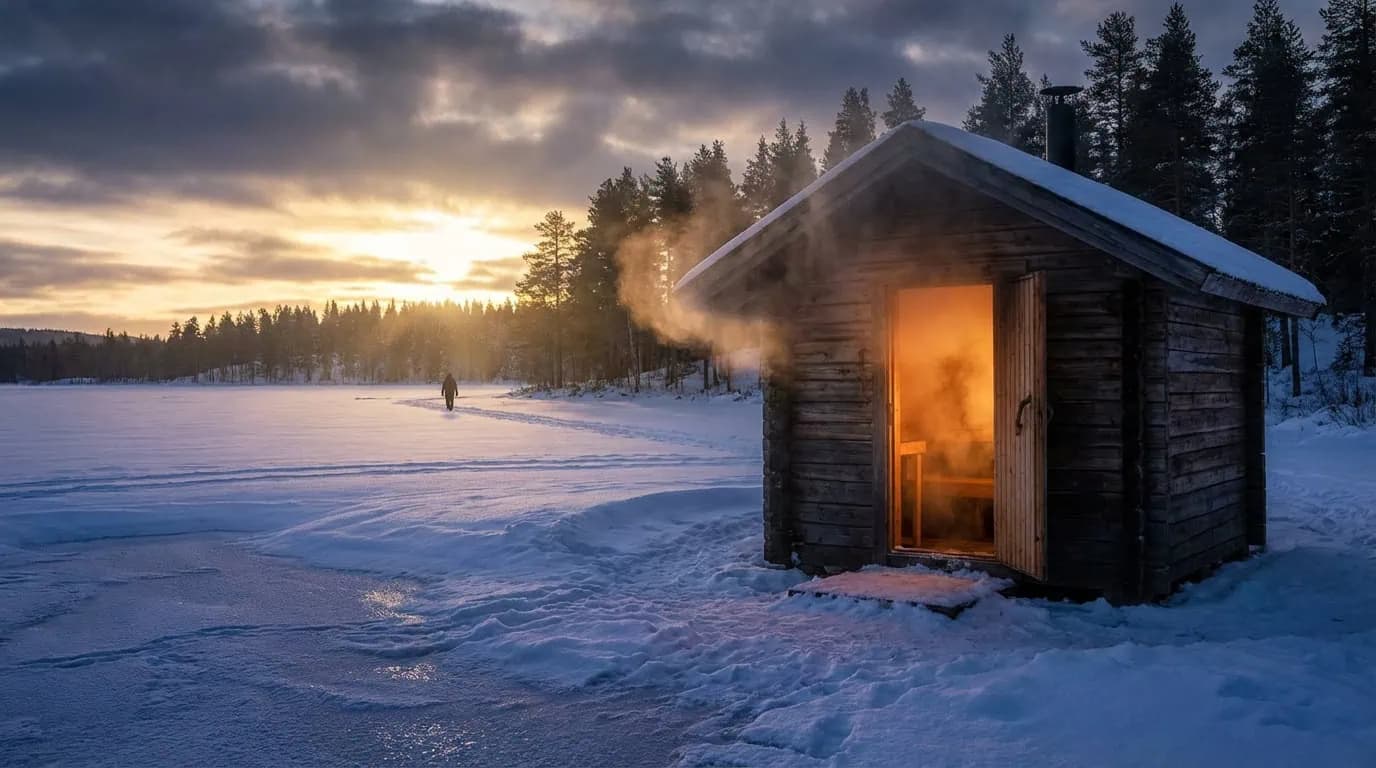
If you have access to a wood-fired sauna near a cold lake, river, or ocean, you have discovered something special.
Natural cold water varies in temperature by season and location. Test it before committing. Ensure you have a safe exit strategy. Never practice alone in remote natural settings.
The combination of heat, cold, and natural beauty creates an experience that no indoor facility can replicate.
The Threshold Moment: What Words Cannot Capture
There is a reason people return to this practice even when the cold remains difficult.
It is not the dopamine, though that is real. It is not the recovery benefits, though those are documented. It is something harder to articulate.
At the threshold between heat and cold, something happens to time. The mental chatter that follows you everywhere, the planning and rehearsing and replaying, goes quiet. For a moment, there is only sensation, only breath, only here.
This is not metaphor. The intensity of the temperature shift forces presence. Your body cannot be cold and distracted at the same time.
Many practitioners describe the moments after the cold as uniquely clear. The world appears sharper. Problems seem smaller. The body feels awake in a way that nothing else produces.
Is this neurotransmitters? Probably. Is it something more? Perhaps.
What matters is that this state is available to you. Not through achievement or purchase or arrival somewhere else, but through willingness to meet discomfort and stay present.
That is the practice.
Safety: What You Need to Know
Contrast therapy is safe for most healthy adults, but it is not without risks. Understand these before beginning.
Who Should Not Practice (Or Should Consult a Physician First)
-
Cardiovascular conditions: The rapid shifts in blood pressure and heart rate can stress the heart. If you have heart disease, uncontrolled hypertension, or a history of stroke, get medical clearance before starting.
-
Pregnancy: Elevated core temperature can pose risks during pregnancy, particularly in the first trimester. Consult your healthcare provider.
-
Raynaud's disease: Cold exposure can trigger painful episodes in those with Raynaud's.
-
Cold urticaria: Some people develop hives or swelling in response to cold. If you have this condition, cold immersion is not appropriate.
-
Recent alcohol consumption: Alcohol impairs your body's ability to regulate temperature. Never combine drinking with contrast therapy.
-
Extreme fatigue or illness: If you are already depleted, adding temperature stress may not serve you. Rest first.
Warning Signs to Exit Immediately
Leave the sauna or cold water immediately if you experience:
- Dizziness or lightheadedness
- Nausea
- Chest pain or pressure
- Difficulty breathing beyond normal cold shock response
- Confusion or disorientation
- Tingling or numbness that persists
These symptoms indicate your body is struggling with the stress. Heed them. There will be other sessions.
The Cold Shock Response
When you first enter cold water, your body initiates a cold shock response: rapid breathing, increased heart rate, and a spike in blood pressure. This is normal and passes within 30-90 seconds as your body adapts.
However, this response is why you should never dive or jump into cold water, especially if you are new to the practice. Enter deliberately, controlling your descent. Let the shock pass while you remain calm.
For those with cardiovascular concerns, this initial spike is the primary risk. Consult your physician.
Hypothermia Awareness
Extended cold exposure can lead to hypothermia, a dangerous drop in core body temperature. Symptoms include:
- Intense shivering (early stage)
- Loss of shivering (dangerous progression)
- Slurred speech
- Confusion
- Clumsiness
For contrast therapy with appropriate durations (2-5 minutes in cold), hypothermia is unlikely. But if you are practicing in natural cold water or pushing longer durations, remain vigilant.
Always have warm clothing and a warm space available after cold exposure.
When to Practice (And When Not To)
Timing matters, both for safety and for getting the most from your practice.
Best Times for Contrast Therapy
Morning: Cold exposure raises body temperature afterward as a rebound effect. Morning sessions can energize your day without disrupting sleep.
Midday: If afternoon energy dips are a challenge, contrast therapy can reset alertness more sustainably than caffeine.
After endurance exercise: The recovery benefits are well-documented. Same-day contrast therapy after running, cycling, or other endurance work can enhance recovery.
After skill-based training: The mental clarity can support learning consolidation. Fine for same-day sessions.
When to Avoid or Modify
Immediately after strength training (if muscle growth is the goal): Cold exposure can blunt the inflammatory response that signals muscle adaptation. Research suggests waiting at least four to six hours after lifting if hypertrophy is your priority.
Heat alone (sauna without cold) does not have this limitation and may actually support recovery from strength training.
Within three hours of bedtime: Both heat and cold exposure paradoxically raise core body temperature afterward. This can interfere with sleep onset. Finish your practice at least three hours before bed.
When sleep-deprived: Contrast therapy is a stressor. If you are already running on empty, adding another stressor may not serve you. Prioritize rest.
During illness: Let your immune system focus on healing. Return to practice when you feel recovered.
Common Mistakes and How to Avoid Them
Learn from others so you can find your own path more smoothly.
Going Too Cold Too Fast
The goal is cold enough to trigger adaptation, not so cold you cannot function. If you are hyperventilating and cannot control your breath after sixty seconds, the water is colder than your current capacity.
Start at 55-60 degrees Fahrenheit and progressively lower over weeks. Adaptation takes time. Honor that.
Not Getting Hot Enough First
The contrast is the point. If you are lukewarm entering the cold, you miss the mechanism. You should be genuinely hot and sweating before transitioning.
Minimum sauna temperature for effective contrast: 160 degrees Fahrenheit. Higher once you are adapted.
Rushing the Cold
There is a temptation to make the cold as brief as possible. Get in, get out, survive.
But the benefits come from duration, not just exposure. Thirty seconds triggers the initial response. Two to three minutes allows the adaptation to deepen. Rushing short-circuits the process.
Find the edge of your tolerance and stay there. Breathe. Let time pass.
Skipping the Natural Rewarm
After your final cold exposure, do not immediately jump in a hot shower or return to the sauna.
The natural rewarming process activates brown adipose tissue, your metabolically active fat that generates heat. Extending this window extends the benefits.
Let yourself shiver. Let your body do what it knows how to do.
Staying Too Still in the Cold
Here is counterintuitive advice: move your limbs in the cold water.
When you stay perfectly still, a thermal layer forms around your body that insulates you from the full cold stimulus. Moving your arms and legs breaks this layer and intensifies the exposure.
You will feel significantly colder, but you will get more benefit from less time.
Frequently Asked Questions
How often should I practice?
Start with two sessions per week. As you adapt, you can increase to three or four weekly sessions. Research suggests two to four sessions per week provides benefit without overstressing the body.
Can I do this every day?
You can, but there is a point of diminishing returns. Your body needs recovery time to adapt. Daily contrast therapy is probably unnecessary unless you have significant recovery demands.
Should I always end on cold?
For most purposes, yes. Ending on cold extends the norepinephrine and dopamine elevation and allows for natural rewarming.
Some practitioners end on heat for relaxation, particularly before bed (though see the timing notes above). You sacrifice some metabolic benefits but gain deep relaxation.
What if I do not have a cold plunge?
A cold shower works well, especially for beginners. Turn it to the coldest setting and stand under the water.
For full-body immersion without a dedicated plunge, fill a bathtub with cold water and ice.
Cold face immersion is another option: fill a bowl with ice water and submerge your face for 15-30 seconds. This triggers the mammalian dive reflex and provides meaningful nervous system benefits.
How cold is cold enough?
Research showing significant dopamine and norepinephrine increases used water around 57 degrees Fahrenheit. However, any water that feels cold enough to make you want to get out will trigger some adaptive response.
Start where you are. The practice matters more than the precise temperature.
Is this safe for everyone?
Contrast therapy is generally safe for healthy adults. However, those with cardiovascular conditions, pregnant women, people with Raynaud's disease, and those with cold urticaria should consult a physician first.
When in doubt, get medical clearance.
How long until I feel the benefits?
Acute benefits, the mood lift, the alertness, the clarity, happen immediately and last several hours.
Adaptation benefits, improved cold tolerance, cardiovascular improvements, easier transitions, become noticeable after two to four weeks of consistent practice.
What should I eat or drink after?
Rehydrate immediately. Water is essential. Electrolytes help if you sweated heavily.
A balanced meal 30-60 minutes after is fine. Some practitioners extend the fasted state to maximize brown fat activation, but this is optional and depends on your goals.
What is the correct sauna and cold plunge sequence?
Heat first, cold second, repeated for 2 to 4 rounds, ending on cold. A single round is: 10 to 15 minutes in the sauna, a brief pause to let sweating settle, 30 to 90 seconds in the cold plunge, then a 1 to 2 minute recovery at room temperature before the next round. Beginners do 2 rounds, experienced practitioners do 3 to 4. The order matters: starting hot opens blood vessels and loads the heat-shock response, and the cold then drives the sharp vascular contrast and the norepinephrine and dopamine elevation that delivers most of the benefit. End on cold unless your only goal is pre-sleep relaxation.
Should I do the sauna or the cold plunge first?
Sauna first in almost every case. The standard contrast therapy sequence is heat then cold because the recovery, mood, and circulatory benefits come from going hot to cold, not cold to hot. The main exception is athletic performance immediately before training or competition, where finishing cold-then-warm can be counterproductive, so some athletes reverse or skip the cold. For general recovery, sleep, and the dopamine and alertness effect, always start with the sauna and finish in the cold.
The Practice Beyond Performance
There is another way to approach contrast therapy, one that has nothing to do with optimization.
In this approach, you enter the sauna not to extract something, but to be present. The heat is not a tool. It is an environment. You sit in it. You let it change you.
When you reach the cold, you do not conquer it. You meet it. You notice the resistance. You notice the fear. And you go anyway, not because you should, but because something in you wants to know what is on the other side.
The threshold becomes a teacher. Every time you cross it, you learn something about yourself. About your capacity. About what happens when you stay present with discomfort instead of fleeing.
This is not a hack. It is a practice.
The ancient cultures that developed these traditions did not have access to research on norepinephrine and dopamine. They did not need it. They knew that moving between heat and cold made them feel more alive. More present. More connected to something they could not name but could feel.
That feeling is still available. It does not require optimization or tracking or perfect protocols. It requires only willingness.
Willingness to step into the heat. Willingness to meet the cold. Willingness to stand at the threshold and see what happens.
Final Thoughts
Contrast therapy is one of the oldest wellness practices on Earth, now validated by modern science. The cardiovascular benefits are real. The neurochemical shifts are measurable. The recovery enhancements are documented.
There is also a mental payoff that is harder to measure: getting comfortable with discomfort. Most people who stick with contrast therapy say the calm-under-stress carries into the rest of their day.
Start gently. Start where you are. Two cycles, ten minutes of heat, thirty seconds of cold. See how it feels.
If it works for you, make it a regular habit. The benefits come from consistency, not from any single brutal session.
Thinking about a home sauna? Get our free buyer's guide: what it actually costs, what actually matters, and what everyone gets wrong. No sales pitch. Send me the guide.
2026 Evidence Snapshot
- Regular sauna use in cohort data is associated with lower cardiovascular and all-cause mortality risk, with a stronger signal at roughly 4-7 sessions per week vs 1 session.
- Cold-water immersion studies repeatedly show short-term rises in norepinephrine and alertness, often peaking within minutes after exposure.
- Recovery meta-analyses show contrast methods can reduce perceived soreness over the 24-96 hour window after hard training.
At-a-Glance Comparison
| Protocol Style | Best For | Heat Block | Cold Block | Weekly Target |
|---|---|---|---|---|
| Gentle reset | Beginners | 8-12 min | 30-60 sec | 2-3 sessions |
| Performance recovery | Athletes | 12-18 min | 1-3 min | 3-5 sessions |
| Nervous-system training | Advanced users | 15-20 min | 2-4 min | 4-6 sessions |
Related Guides (Internal)
Methodology
These guides are built from manufacturer documentation, public specifications, primary research where health claims matter, and repeated buyer questions that show up in real ownership and installation decisions.
Manufacturer responses can clarify pricing bands, warranty terms, support footprint, or common mistakes. They do not move a page up the shortlist on their own.
Next Step
What to do next
Use one of these three paths. They are here to move the decision forward, not add more noise.
Want the full buyer path in your inbox? Five emails over three weeks.
Related Guides
Buying Guide • Cold Plunge
Sauna, Cold Plunge and Red Light Stack: What It Really Costs
The 2026 reality: buyers budget sauna, cold plunge, and red light together. Real cost tiers, the right buy order, and where to spend and where to skip.
Sauna • Cold Plunge
Sauna and Cold Plunge Routine: A Step-by-Step Daily Practice
A practical sauna and cold plunge routine with exact timing, temperatures, and order. Morning or evening protocols, home setup options, and common mistakes.
Sauna Safety • Beginners
How Long Should You Stay in a Sauna? Safe Time Limits by Level
How long should you stay in a sauna? Beginners usually need 5-10 minutes, regular users 10-20. Learn safe time limits by experience, temperature, and sauna type.
Strength Training • Muscle Growth
Sauna After Lifting: Does Heat Help or Hurt Muscle Growth?
The science of sauna timing for strength athletes. When heat helps recovery and when it might blunt your gains. Evidence-based protocols for lifters.