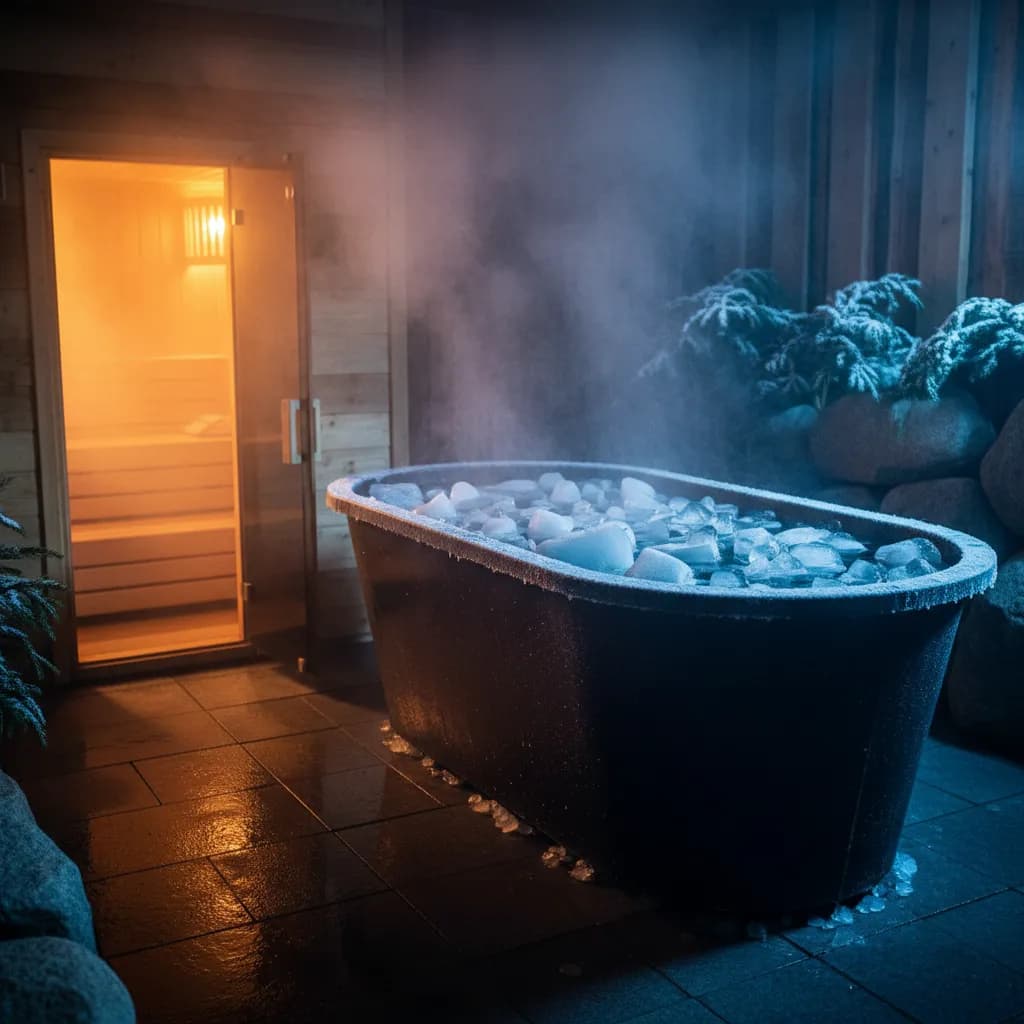
Sauna and Cold Plunge Routine: A Step-by-Step Daily Practice
A practical sauna and cold plunge routine with exact timing, temperatures, and order. Morning or evening protocols, home setup options, and common mistakes.
Quick answer: The standard sauna and cold plunge routine is 15 to 20 minutes of heat at 170 to 190 F, then 2 to 3 minutes of cold at 40 to 55 F, then 5 to 10 minutes of rest, repeated for 2 to 3 rounds. Always start with heat, and never skip the rest between rounds. End on cold in the morning for hours of alertness, and end on heat in the evening for sleep. Beginners should start with 55 to 65 F water for 30 to 60 seconds and work down over weeks.
Best for
People who want a repeatable daily contrast practice with exact timing, plus home cold plunge options from a free cold shower to a chiller tub.
Wrong fit
Anyone with uncontrolled high blood pressure, a recent heart attack or stroke, Raynaud's disease, or a pregnancy, who should get medical clearance first.
Tradeoff
Ending on cold energizes and ending on heat relaxes, so the same routine run in the wrong order can wreck your sleep or flatten your morning.
The contrast is the practice. Hot teaches you to endure. Cold teaches you to let go.
This guide is not a science paper. If you want the research behind contrast therapy, the hormonal responses, the cardiovascular studies, read our contrast therapy deep dive. It covers all of that thoroughly.
This guide is the practical version. What to do, in what order, for how long, and how to build it into your day.
What you will learn:
The basic contrast protocol, step by step
Morning routine vs evening routine (they are different)
Temperature and timing guidelines
Cold plunge options for every budget
How to build a backyard contrast setup
Common mistakes and who should sit this one out
The Basic Protocol
Here is the whole thing in one breath.
Heat (15-20 minutes) then Cold (2-3 minutes) then Rest (5-10 minutes). Repeat 2-3 rounds.
That is the skeleton. Everything else is detail. But the details matter, so let us walk through it.
Step 1: Pre-Heat (5-10 Minutes Before)
Turn your sauna on 30-45 minutes before your session. You want it at full temperature before you step in.
Hydrate. Drink 16-20 oz of water in the hour before your session. Not during. Before. You will sweat heavily and you want to start topped off.
Skip the meal. Do not do a contrast session within 90 minutes of a large meal. Your body is directing blood to digestion. You are about to redirect it dramatically.
Step 2: The Heat (15-20 Minutes)
Step into the sauna. Sit on the upper bench if you have two tiers. The heat is significantly stronger up high.
Target temperature: 170-190°F (75-90°C) for traditional sauna. 130-150°F (55-65°C) for infrared.
For the first 5 minutes, just breathe. Let your body adjust. Your heart rate will rise. Your skin will flush. This is normal.
Around 10 minutes, you will start sweating heavily. This is where most people feel the shift. The mental chatter quiets. The heat takes over.
Stay for 15-20 minutes. If you are new, start with 10 and build up over weeks. Leave immediately if you feel dizzy, nauseous, or confused. Those are signals, not challenges to push through.
Step 3: The Cold (2-3 Minutes)
This is the hard part. And the whole point.
Move from the sauna directly to your cold water. Do not hesitate at the edge. Hesitation makes it worse. Step in, sit down, breathe.
Target temperature: 40-55°F (4-13°C). Start at the warmer end if you are new.
The first 30 seconds are intense. Your breath wants to race. Slow it down deliberately. Exhale longer than you inhale. In through the nose, out through the mouth. Control the breath and you control the experience.
At 60-90 seconds, something shifts. The shock fades and your body stops fighting. What is left is a calm, clear-headed state that is the whole reason people do this.
Stay for 2-3 minutes. Beginners: 30-60 seconds is enough. There is no medal for suffering. The benefit comes from the transition, not the duration.
Step 4: Rest (5-10 Minutes)
Get out of the cold water. Do not towel off aggressively. Let the air hit your skin.
Sit or stand somewhere comfortable. Outside if the weather allows it. This rest period is not filler. It is where the magic happens. Your blood vessels are dilating, your nervous system is recalibrating, and your body is flooding with feel-good chemistry.
Many people describe this as the best 5 minutes of their day. A buzzing calm. Complete presence.
Step 5: Repeat
Go back to the sauna for round two. Then cold again. Then rest again.
Two to three rounds is the standard practice. Four rounds if you are experienced and have the time. One round is still valuable if that is what your schedule allows.
Morning Routine vs Evening Routine
The same tools, different intentions. The order you finish in changes the outcome.
Morning Protocol (Energy and Focus)
End on cold.
The cold triggers a norepinephrine release that stays elevated for hours. Ending your morning session in the cold water sets you up with sustained alertness and focus.
Suggested morning flow:
Sauna: 15 minutes
Cold: 2 minutes
Rest: 5 minutes
Sauna: 10 minutes
Cold: 2 minutes (end here)
Brief rest, then start your day
Total time: about 40 minutes. You can compress this to 25 minutes with one round on busy mornings.
Evening Protocol (Sleep and Recovery)
End on heat.
Heat promotes parasympathetic activation. It tells your body the day is over. Ending on heat followed by a gentle cool-down primes you for deep sleep.
Suggested evening flow:
Sauna: 15 minutes
Cold: 1-2 minutes (shorter than morning)
Rest: 5 minutes
Sauna: 15 minutes (end here)
Cool down naturally for 20-30 minutes before bed
Total time: about 40 minutes, plus cool-down. Start your session 90 minutes before your target bedtime.
Temperature Cheat Sheet
Element
Beginner
Intermediate
Experienced
Sauna temp
150-170°F
170-185°F
185-200°F
Cold temp
55-65°F
45-55°F
38-45°F
Sauna time
10-12 min
15 min
15-20 min
Cold time
30-60 sec
1-2 min
2-4 min
Rounds
2
2-3
3-4
Work your way down this table over weeks, not days. Your body adapts. Respect the process.
Cold Plunge Options for Home
You do not need a $5,000 cold plunge tub to start. Here are your options from cheapest to most luxurious.
Cold Shower ($0)
Turn the shower to full cold after your sauna session. It is not immersive, but it works. Water temperature varies by region and season. In northern states during winter, tap water can be 40-50°F. In summer in the south, it might not get below 70°F.
Ice in a Chest Freezer or Stock Tank ($100 - $300)
Buy a large stock tank (Rubbermaid, 100-150 gallon) and fill it with cold water. Add bags of ice to get the temperature down. This is the budget workhorse. Change the water weekly.
Dedicated Cold Plunge Tub ($500 - $2,000)
Purpose-built tubs with insulation. No chilling system, so you still need ice or cold water. Better than a stock tank because they insulate, drain properly, and look less like you are farming livestock.
Cold Plunge with Chiller ($2,500 - $8,000)
The real deal. A tub with a built-in or external chiller that maintains your target temperature automatically. No ice runs. Set it and forget it. Water filtration keeps it clean for weeks. When you are ready to pick a specific tub, our sister site Agewell keeps a scored shortlist of cold plunge tubs that weighs chiller models against the ice route on real annual cost.
Natural Water ($0)
Lake, river, ocean, or even a garden hose in winter. The original cold plunge. Check for safety (currents, water quality, hypothermia risk) and never go alone.
Building a Backyard Contrast Setup
If you are planning both a sauna and a cold plunge, think about the layout together. You want them close to each other, ideally 10-20 feet apart. Far enough to have a brief transition, close enough that you do not lose your nerve on the walk over.
Budget tiers for a complete backyard setup:
Setup
Sauna
Cold
Total
Starter
Portable sauna ($300-$800)
Stock tank + ice ($100)
$400 - $900
Mid-range
Barrel sauna kit ($4,000-$8,000)
Dedicated plunge tub ($1,000)
$5,000 - $9,000
Premium
Custom outdoor sauna ($8,000-$15,000)
The Plunge with Pro Chiller ($6,790 on September 25, 2026)
About $14,790 - $21,790 before installation and delivery
The Plunge is a premium option, not a requirement for contrast therapy. Its original laydown tub includes a separate chiller, and the current promotional price can change. Check the electrical and drainage plan for both pieces of equipment before buying.
For outdoor sauna planning, you will also need to budget for foundation, electrical, and possibly permits. Our cost guide breaks down the full picture.
Practical layout tips:
Place the cold plunge where you can drain it easily (near a slope or drain)
Position the sauna where the electrical run is shortest
Consider privacy. You will be going back and forth in minimal clothing
A covered transition area (pergola, overhang) makes winter sessions more comfortable
Non-slip surfaces between the two. Wet feet on cold concrete or wood is a fall risk
What Order Matters (And Why)
Always start with heat. Going into cold water without warming up first is shock without purpose. The sauna primes your cardiovascular system for the contrast.
End on cold for alertness. The norepinephrine spike from cold exposure lasts 2-3 hours. Great for mornings or before focused work.
End on heat for relaxation. The parasympathetic activation from heat promotes calm and sleep readiness. Great for evenings.
Never skip the rest. The rest between rounds is where your body processes the contrast. Skipping rest and going straight from cold back to heat is stressful rather than restorative.
Common Mistakes
Going too cold too fast. Your first cold plunge should be 55-60°F, not 40°F. Cold adaptation is real and it takes weeks. Jumping into near-freezing water on day one is unpleasant, potentially dangerous, and teaches your brain to dread the practice rather than crave it.
No rest between rounds. The rest is the reward. If you skip it, you are doing stress training, not contrast therapy. Sit down. Breathe. Let the calm arrive.
Eating right before. Blood flow shifts dramatically during contrast therapy. A full stomach during this process is a recipe for nausea.
Competing with yourself. "Last time I did 3 minutes in the cold, today I will do 5." This is not progressive overload at the gym. More is not better. Consistent daily practice at moderate exposure beats heroic weekly sessions.
Dehydration. You lose a lot of fluid in the sauna. Drink water before and after. If you feel lightheaded during a session, you probably started dehydrated.
Who Should Skip Contrast Therapy
Contrast therapy is safe for most healthy adults. But some people should talk to their doctor first or skip it entirely.
Uncontrolled high blood pressure
Recent heart attack or stroke
Pregnancy
Raynaud's disease (severe cold sensitivity)
Open wounds or active skin infections
Anyone currently ill with fever
If you have any cardiovascular condition, get clearance from your doctor before starting. The rapid blood vessel changes during contrast therapy put real demands on your heart.
The hardest part is not the cold. It is showing up every day.
Start with three sessions per week. Keep it short. One round of heat and cold with a rest period. Total time: 25 minutes.
Once it becomes part of your routine, expand to daily. Add a second round. Experiment with morning vs evening. Find the rhythm that fits your life.
The people who maintain this practice long-term are not the ones who went hardest on day one. They are the ones who made it easy enough to do on a Tuesday when they did not feel like it.
Frequently Asked Questions
How long should you cold plunge after sauna?
Two to three minutes is the standard recommendation for most people. Beginners should start with 30-60 seconds and build up over weeks. The therapeutic benefit comes from the temperature transition itself, not from extended time in cold water. Staying longer than 4-5 minutes increases hypothermia risk without providing additional benefit.
Should you end on hot or cold?
It depends on your goal. End on cold if you want energy and alertness, since cold exposure triggers a norepinephrine release that lasts 2-3 hours. End on heat if you want relaxation and better sleep, since heat activates the parasympathetic nervous system and the post-session temperature drop signals your body to prepare for rest.
How many rounds of sauna and cold plunge?
Two to three rounds is the standard practice. Each round consists of 15-20 minutes of heat, 2-3 minutes of cold, and 5-10 minutes of rest. One round still provides benefits on days when time is short. Four rounds is reasonable for experienced practitioners, but more than that offers diminishing returns.
Sources
Laukkanen, T., et al. "Cardiovascular and Other Health Benefits of Sauna Bathing: A Review of the Evidence." Mayo Clinic Proceedings, vol. 93, no. 8, 2018, pp. 1111-1121. Overview of sauna's cardiovascular effects and the physiological basis for contrast therapy.
Srámek, P., et al. "Human Physiological Responses to Immersion into Water of Different Temperatures." European Journal of Applied Physiology, vol. 81, 2000, pp. 436-442. Measured norepinephrine increases of 200-300% following cold water immersion at 14°C.
Mooventhan, A., and Nivethitha, L. "Scientific Evidence-Based Effects of Hydrotherapy on Various Systems of the Body." North American Journal of Medical Sciences, vol. 6, no. 5, 2014, pp. 199-209. Review of contrast water therapy mechanisms and outcomes.
Huberman, A. "Using Deliberate Cold Exposure for Health and Performance." Huberman Lab Podcast, Episode 66, 2022. Practical protocols for cold exposure timing, temperature, and frequency based on published research.
Hannuksela, M.L., and Ellahham, S. "Benefits and Risks of Sauna Bathing." The American Journal of Medicine, vol. 110, no. 2, 2001, pp. 118-126. Safety review covering cardiovascular responses during sauna-cold contrast cycling.
The Bottom Line
Sauna, then cold, then rest. That is the whole practice. The temperatures, the timing, the number of rounds, those are dials you adjust over time.
Start warm. Start brief. Stay consistent.
The contrast trains something that carries beyond the session: staying calm when things get uncomfortable, and controlling your breathing through the shock instead of letting it control you.
These guides are built from manufacturer documentation, public specifications, primary research where health claims matter, and repeated buyer questions that show up in real ownership and installation decisions.
Manufacturer responses can clarify pricing bands, warranty terms, support footprint, or common mistakes. They do not move a page up the shortlist on their own.
Want the full buyer path in your inbox? Five emails over three weeks.
When you are ready to buy
This guide is about using a sauna. When the question becomes which one to buy, these profiles are the shortest route: sourced prices, warranty terms and who each brand actually fits.