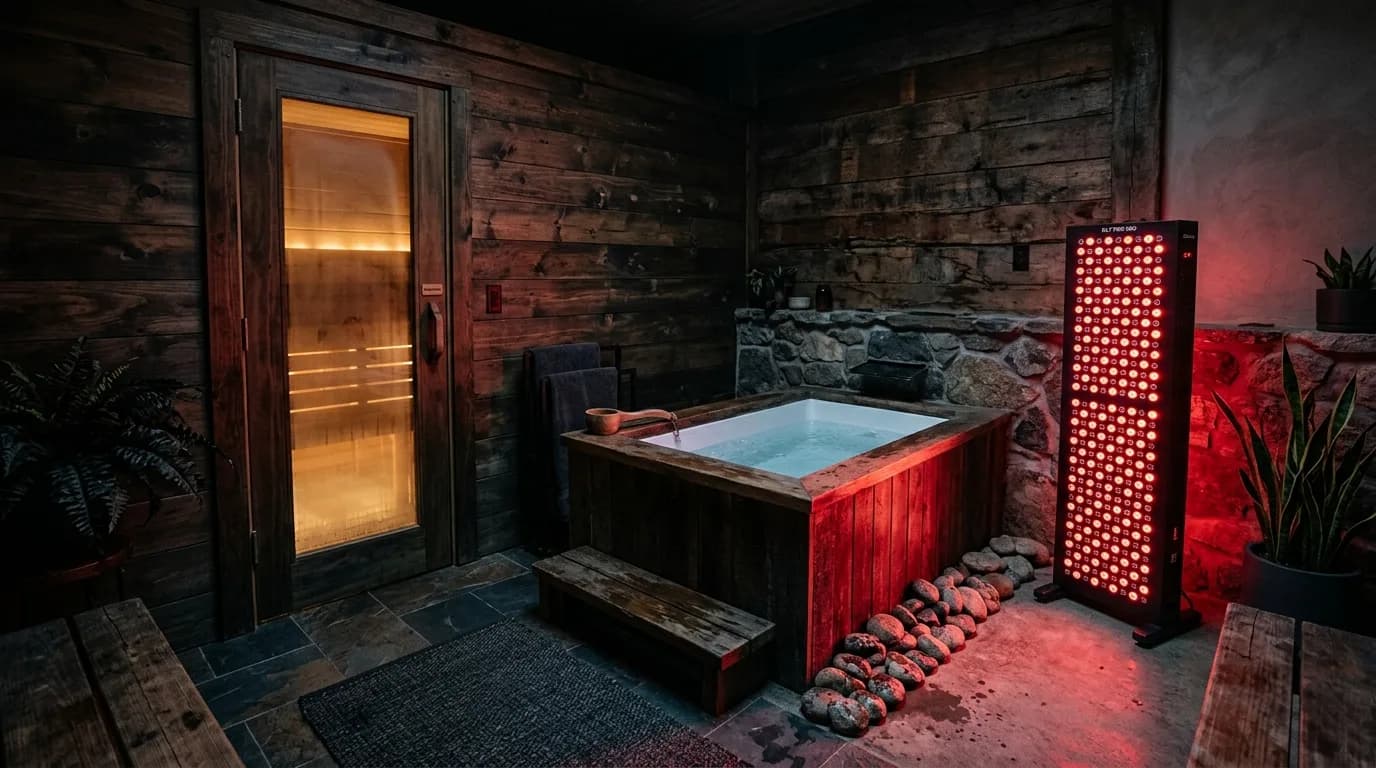
Sauna, Cold Plunge and Red Light Stack: What It Really Costs
The 2026 reality: buyers budget sauna, cold plunge, and red light together. Real cost tiers, the right buy order, and where to spend and where to skip.
Budget
Quick answer: By 2026, the recovery purchase is usually three products, not one: a sauna, a cold plunge, and red light therapy. An entry stack realistically lands around $10,000 to $15,000 all-in, and a premium stack runs past $35,000. The smart order is sauna first, cold plunge second, red light last, because that is the order of return on the money for most people.
Best for
Buyers planning a recovery setup who already know they want more than just a sauna, and want a realistic total before they start.
Wrong fit
Buyers who only want a sauna and are not interested in cold or light therapy. Start with the sauna cost guide instead.
Tradeoff
Buying the stack together is cleaner to plan and often cheaper per piece, but it is a large single outlay. Buying in sequence spreads the cost and lets you confirm the habit before the next purchase, at the cost of a higher total over time.
Through early 2026, the home recovery purchase stopped being one product. The recurring thread on Reddit and the sauna forums is the same: people are not asking "which sauna," they are budgeting a sauna, a cold plunge, and red light therapy as one project. If you are planning that, here is the total and the order that actually makes sense.
This replaces the old two-product "sauna plus cold plunge" framing. The third item is now part of how buyers think, so the budget conversation has to include it.
What the full stack actually costs
Tier
Realistic all-in
What it looks like
Entry stack
~$10,000-$15,000
Solid infrared or compact traditional sauna, a reliable chest-style cold plunge, a quality panel or focused red-light device
Mid stack
~$15,000-$25,000
Better traditional sauna with proper install, a chiller-based plunge, a larger red-light setup
Premium stack
$35,000+
High-end traditional or combo cabin, premium plumbed plunge, integrated or multiple red-light units
These are all-in ranges, not box prices. As with any sauna project, the install and site work move the number more than the products do. See the home sauna cost guide for 2026 for how that breaks down.
The order that makes sense: sauna, then plunge, then light
Buying all three at once is fine if the budget is there. But if you are sequencing, this is the order of return for most people:
1. Sauna first
The sauna is the anchor. It is the most-used piece for most people, the one with the deepest established research behind heat exposure, and the one that defines the space and the electrical work. Get this right first. If you have not settled the sauna decision, start with infrared vs traditional sauna.
2. Cold plunge second
The plunge is the natural pair. Contrast between heat and cold is the core of the routine, and the cold side is cheaper and simpler to add than most buyers expect. The full sequence and timing is covered in the contrast therapy complete guide. Decide between a simple chest-style tub and a chiller-based unit based on whether you want it cold on demand or are willing to manage ice. For the specific-model decision, our sister site Agewell keeps a scored shortlist of cold plunge tubs with the chiller-versus-ice math worked out.
3. Red light last
Red light is the right third purchase, not the first. It is the most optional of the three for general recovery, the easiest to add later, and the one where buyers most often overspend on features they will not use. When you get here, the key decision is whether you want a dedicated red-light device or a sauna cabin with red light built in, which is exactly the question the best red light sauna guide answers. If you go the dedicated-panel route, the spec that matters is measured irradiance, not the number on the box, and Agewell ranks red-light panels on the spectrometer reading rather than the advertised figure.
Where to spend and where to skip
Spend on the sauna and its install. It is the anchor, the most-used piece, and the one where a bad install ruins the experience.
Spend on cold-on-demand if you will actually use it. The single biggest reason home plunges go unused is the friction of ice. A chiller removes that friction. If budget forces a choice, this is often worth it.
Skip the maximalist red-light spec. For general recovery, a focused quality device or a built-in panel does the job. The biggest red-light overspends come from buying clinical-scale arrays for a home routine.
Skip the "all premium or nothing" mindset. A great sauna with a simple plunge and a modest light device beats three rushed premium purchases on a stretched budget.
Common mistakes in stacking
Buying all three before confirming the habit. If you are not certain the routine will stick, a smaller sauna and a simple plunge first is the real test. Add from there.
Letting red light drive the budget. It is the third purchase for a reason. Buyers who start with an expensive light setup often under-budget the sauna, which is the piece they will use most.
Forgetting the plunge needs space, drainage, and sometimes power. A chiller plunge is an appliance. Plan its spot the way you plan the sauna's, not as an afterthought.
Treating the stack as one box price. The install, electrical, and site work still apply, and they still move the total more than the product tags do.
Plain recommendation
If you have the budget and the certainty, build the entry-to-mid stack together and plan the space for all three from day one. If you are not certain the routine will stick, buy the sauna first, add a simple cold plunge once the habit is real, and treat red light as the considered third step. The order, sauna then plunge then light, is the same either way. It tracks how much each piece actually gets used.
FAQ
What is the total cost for a backyard sauna and cold plunge setup?
A realistic entry stack lands around $10,000 to $15,000 all-in, a mid stack roughly $15,000 to $25,000, and a premium stack past $35,000. Add red light and you are at the top of each band. These are all-in figures including install, not just product prices. For a backyard build specifically, the site pad and the power run to a detached structure move the total more than the products themselves.
Is sauna or cold plunge more important if I can only do one?
Start with the sauna. It is the anchor: the most-used piece for most people, the deepest research base behind heat exposure, and the one that defines the space and electrical work. The cold plunge is the high-value second add, not the thing you skip the sauna for. If budget forces one now, buy the sauna right and add cold on demand later.
What order should I buy the sauna, cold plunge, and red light in?
Sauna first, cold plunge second, red light last. That is the order of how much each piece gets used and how much return it delivers for most people. The sauna is the anchor and defines the space and electrical work, so it should be decided first.
Is red light therapy worth adding to a sauna and cold plunge?
It is a reasonable third addition, not a priority first purchase. For general recovery a focused device or a built-in panel is enough. The most common red-light mistake is overspending on a clinical-scale array for a home routine. See best red light sauna.
Can I buy the stack over time instead of all at once?
Yes, and for many buyers that is the smarter path. Buying in sequence spreads the cost and lets you confirm the habit before the next purchase. The tradeoff is a higher total over time versus buying together. Buy in the sauna, then plunge, then light order either way.
Does the contrast therapy routine change with three products?
The core heat-then-cold sequence is unchanged. Red light is used separately rather than in the contrast cycle itself. The timing and sequence for the heat and cold portion is covered in the contrast therapy complete guide.
These guides are built from manufacturer documentation, public specifications, primary research where health claims matter, and repeated buyer questions that show up in real ownership and installation decisions.
Manufacturer responses can clarify pricing bands, warranty terms, support footprint, or common mistakes. They do not move a page up the shortlist on their own.