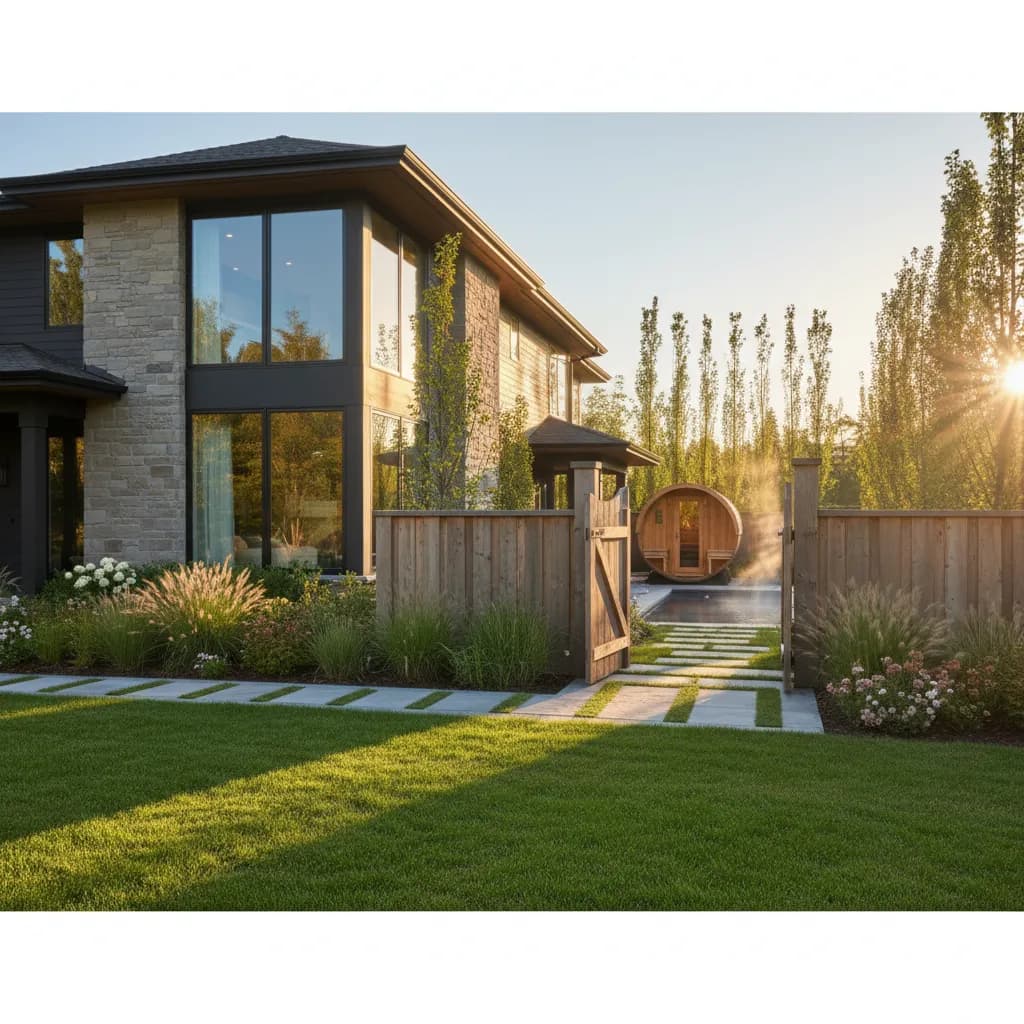
Does a home sauna increase property value? Real estate data, ROI by market, and why the real return on a sauna is not about resale.
Quick answer: A well-installed home sauna typically adds 1-3% to appraised value, with the strongest returns in Nordic-influenced regions, mountain resort towns, and luxury markets; in hot climates or entry-level housing it may add nothing. The better math is usage: a $5,000 sauna used 4 times a week for 10 years costs about $2.50 per session versus $25-60 at a spa. At resale, permitted electrical work and clean maintenance records matter as much as the sauna itself.
Best for
Homeowners weighing a sauna purchase who want real resale numbers before committing.
Wrong fit
Anyone hoping a sauna is a reliable property investment on its own; kitchens and bathrooms return more predictably.
Tradeoff
Resale return depends heavily on your local market, so the investment only clearly pays off if you actually use the sauna.
If you are building a sauna purely for resale value, there are better investments. New kitchen countertops will give you a more predictable return. A bathroom remodel will too.
But if you are building a sauna because you want to use it every day, the resale value is a bonus. And it can be a meaningful one in the right market.
Here is the picture.
What this guide covers:
Real estate data on sauna ROI
Markets where a sauna adds the most (and least) value
The "lifestyle ROI" argument
Cost vs value at different price points
Insurance and permit considerations
How to present a sauna when selling your home
What the Data Says
Home saunas fall into the "luxury amenity" category in real estate appraisals. Like a pool, a wine cellar, or a home theater, their impact on property value depends heavily on the local market and buyer pool.
The general range: A well-installed home sauna can add 1-3% to your home's appraised value. In strong markets with the right buyer demographics, that number can climb higher. In weak markets, a sauna may add zero to the appraisal.
Some reference points:
A $5,000 sauna in a $400,000 home typically recoups 50-80% of its cost at resale.
A $15,000 custom sauna in a $800,000+ home can recoup 70-100% in wellness-oriented markets.
A poorly installed or unmaintained sauna can actually reduce perceived value. Buyers see it as a liability, not an asset.
The National Association of Realtors does not track sauna installations specifically, but agents who work in markets with high sauna adoption (Minnesota, Wisconsin, Pacific Northwest, Colorado mountain towns) report that saunas are increasingly expected in premium listings rather than viewed as unusual.
Markets Where a Sauna Adds Most Value
Nordic-influenced regions. Minnesota, Wisconsin, Michigan's Upper Peninsula, and the Pacific Northwest have strong Scandinavian cultural roots. Sauna culture is established here. Buyers in these markets understand saunas, want them, and pay for them.
Mountain and resort communities. Ski towns, lake communities, and mountain retreats. A sauna fits the lifestyle. Buyers shopping for a cabin in Breckenridge or a lake house in Tahoe expect wellness amenities.
Luxury markets everywhere. In homes priced above $750,000, wellness features are increasingly standard. Home gyms, steam showers, saunas, and cold plunges are part of the premium home package. A well-designed sauna in this price range is an expected feature, not a novelty.
Health-conscious urban markets. Cities with strong wellness cultures like Portland, Austin, Denver, and Boulder. Buyers in these markets are more likely to see a sauna as a valuable feature worth paying for.
Markets Where a Sauna Adds Least Value
Hot climates. Phoenix, Miami, Houston. When it is 100°F outside for five months, a sauna is a harder sell. Not impossible, but the buyer pool shrinks significantly.
Entry-level housing. In homes priced under $300,000, most buyers are stretching their budget for square footage and location. A sauna is seen as wasted space that could be a bedroom, office, or storage.
Markets unfamiliar with saunas. In regions without a sauna culture, many buyers do not know what to do with one. They see an odd wooden room in the basement and wonder what it would cost to convert back to usable space. Education is part of the selling process.
The Lifestyle ROI: The Number That Matters More
Here is a different way to think about return on investment.
A home sauna that costs $5,000 and gets used 4 times per week for 10 years means roughly 2,000 sessions. That is $2.50 per session.
Compare that to:
A single session at a spa or wellness center: $25-$60
A monthly gym membership with sauna access: $50-$100/month
A float tank session: $60-$90
At 4 sessions per week, a home sauna pays for itself in avoided spa costs within 6-18 months. Everything after that is free.
But the real return is harder to quantify. Better sleep. Lower stress. A daily practice that grounds you. Time with your partner in a space with no screens. These things do not show up on an appraisal, but they are the actual reason people build saunas.
If you use it, the ROI is enormous. If it sits unused, it is an expensive closet. The deciding factor is always usage, which is why our buying guide emphasizes choosing a setup you will actually use consistently.
Takeaway: Good chance of positive ROI at resale, especially in sauna-friendly markets. Combined with daily use, this is the sweet spot.
Scenario 3: Custom Build in a Premium Home
Home value: $900,000+
Sauna cost: $15,000 (custom cedar, professional installation)
Likely value added: $9,000-$27,000 (1-3%)
Takeaway: In the right market, this pays for itself at resale. In premium homes, it may be expected. A missing wellness feature can be a negative in luxury listings.
If you are thinking about resale value, build and maintain your sauna with future buyers in mind.
What impresses buyers:
Clean, well-maintained wood (no stains, no mildew, no rough surfaces)
Professional electrical work with proper permits on file
A heater that works reliably with visible safety features (timer, auto-shutoff)
Good ventilation (no musty smell when the door opens)
A space that feels intentional, not improvised
What scares buyers away:
DIY electrical work without permits
Visible mold or water damage
A jury-rigged setup in a random corner
No documentation on the installation
Heater that looks old or damaged
The difference between "this is a wonderful feature" and "how much will it cost to rip this out" often comes down to maintenance. A well-kept sauna sells itself. A neglected one raises red flags.
Insurance and Permit Considerations
Insurance
Most home insurance policies cover a properly installed sauna as part of the dwelling. But "properly installed" is the key phrase.
Call your insurance company before installation. Some require notification.
Permitted electrical work is important. If an unpermitted sauna causes a fire, your claim may be denied.
Outdoor saunas may need to be added as a separate structure, similar to a detached garage or shed.
Wood-fired saunas may increase your premium slightly due to fire risk.
Permits
Permit requirements vary by jurisdiction, but common triggers include:
Electrical work: Almost always requires a permit for the 240V circuit
Structural changes: Moving walls, adding doors, modifying load-bearing elements
New structures: Outdoor saunas over a certain size (often 120 sq ft)
Plumbing: If you add a drain or water supply
The permit paperwork matters at resale. Buyers' agents and home inspectors look for permitted work. Unpermitted modifications can delay or derail a sale.
How to Present a Sauna When Selling
If you are selling a home with a sauna, present it as a lifestyle feature, not a spec sheet item.
In the listing:
Photograph it well. Warm lighting, clean wood, maybe a bucket and ladle on the bench. Make it inviting.
Mention it early in the listing description. "Home spa with traditional Finnish sauna" reads better than burying it under "other features."
Include maintenance records and permit documentation in your seller disclosures.
During showings:
Have it warm (or recently used) so buyers can feel it, not just see it.
Keep it spotless. A clean sauna signals a well-maintained home.
If possible, leave a small card explaining what it is, how it works, and the health benefits. Many buyers are curious but unfamiliar.
Staging tips:
Fresh towels folded on the bench
A wooden bucket and ladle
Soft lighting on
Door slightly open so buyers can see inside without committing to entering
Frequently Asked Questions
Does a sauna add value to my home when I sell?
A well-installed home sauna can add 1-3% to your property's appraised value, depending on the local market and buyer demographics. In Nordic-influenced regions, mountain communities, and luxury markets, the return is strongest. In hot climates or entry-level housing markets, a sauna may add little to the appraisal. The installation quality and maintenance condition matter as much as the sauna itself.
Is a home sauna a good investment?
From a lifestyle perspective, absolutely. A $5,000 sauna used four times per week costs about $2.50 per session over ten years, compared to $25-$60 per visit at a spa. From a pure resale perspective, most homeowners recoup 50-100% of their sauna investment depending on the market. The best return comes from actually using it regularly, not from the property appraisal.
Do home buyers want saunas?
Demand varies by market. In Minnesota, Wisconsin, the Pacific Northwest, and mountain resort communities, saunas are increasingly expected in premium homes. In luxury markets nationwide, wellness features including saunas, steam showers, and cold plunges are becoming standard amenities. In regions without a sauna culture, buyer interest is growing but not yet mainstream.
Sources
National Association of Realtors (NAR), "2024 Remodeling Impact Report." Data on homeowner satisfaction and cost recovery for luxury amenity additions, including spa features.
Zillow Research, "Home Features That Sell: An Analysis of Listing Language" (2023). Analysis of listing keywords associated with faster sales and higher sale prices in premium housing markets.
National Association of Home Builders (NAHB), "What Home Buyers Really Want" (2024). Survey data on buyer preferences for wellness and luxury features by price tier.
HomeAdvisor / Angi, "How Much Does It Cost to Install a Sauna?" (2025). National average installation costs and cost recovery estimates for home sauna projects.
Insurance Information Institute, "Home Improvement and Your Insurance." Guidelines on homeowner insurance implications for structural additions and specialty installations.
The Real Reason to Build One
Let us be direct. The question "does a sauna add home value" is usually asked by someone who wants a sauna and is looking for financial permission to build one.
Here is your permission: build it because you want to use it.
If you sauna three or four times a week, the cost per session drops to almost nothing within the first year. The health benefits are well-documented. The stress relief is immediate. The sleep improvements are real.
The resale value is a bonus. A nice bonus in the right market. But it is not the reason to build a sauna. The reason is the practice itself.
The Finns did not build saunas to increase property values. They built them because the sauna is the center of home life. A place to clean, to think, to be still. That has not changed in a thousand years.
Build it for your life. If it happens to help when you sell the house someday, even better.
These guides are built from manufacturer documentation, public specifications, primary research where health claims matter, and repeated buyer questions that show up in real ownership and installation decisions.
Manufacturer responses can clarify pricing bands, warranty terms, support footprint, or common mistakes. They do not move a page up the shortlist on their own.