Sauna Guide
Wood-Fired vs Electric Sauna: The Soul of Heat
Beyond the specs and costs, the choice between wood and electricity shapes how you experience the sauna. A guide to finding your heat source.
Quick answer: Electric heaters win on convenience: 30-45 minute heat-up, precise thermostat control, roughly $1-3 per session, and straightforward indoor installation, which is why about 90% of Finnish home saunas are electric. Wood-fired stoves cost $2,000-8,000 installed, need a chimney and 45-90 minutes of fire tending, but deliver the ritual, off-grid capability, and a softer heat many bathers prefer. Daily users should default to electric; weekend ritualists can justify wood.
Best for
Buyers choosing a heat source who want the practical costs and the experiential differences laid out with real numbers.
Wrong fit
Apartment and condo owners; chimney requirements rule out wood-fired for nearly all of them.
Tradeoff
Wood buys atmosphere and ritual at the cost of time and maintenance; electric buys frictionless daily use at the cost of the fire.
There is a moment, just before the sauna reaches temperature, when everything changes.
With an electric heater, a light clicks on. The thermostat has done its work. Step inside.
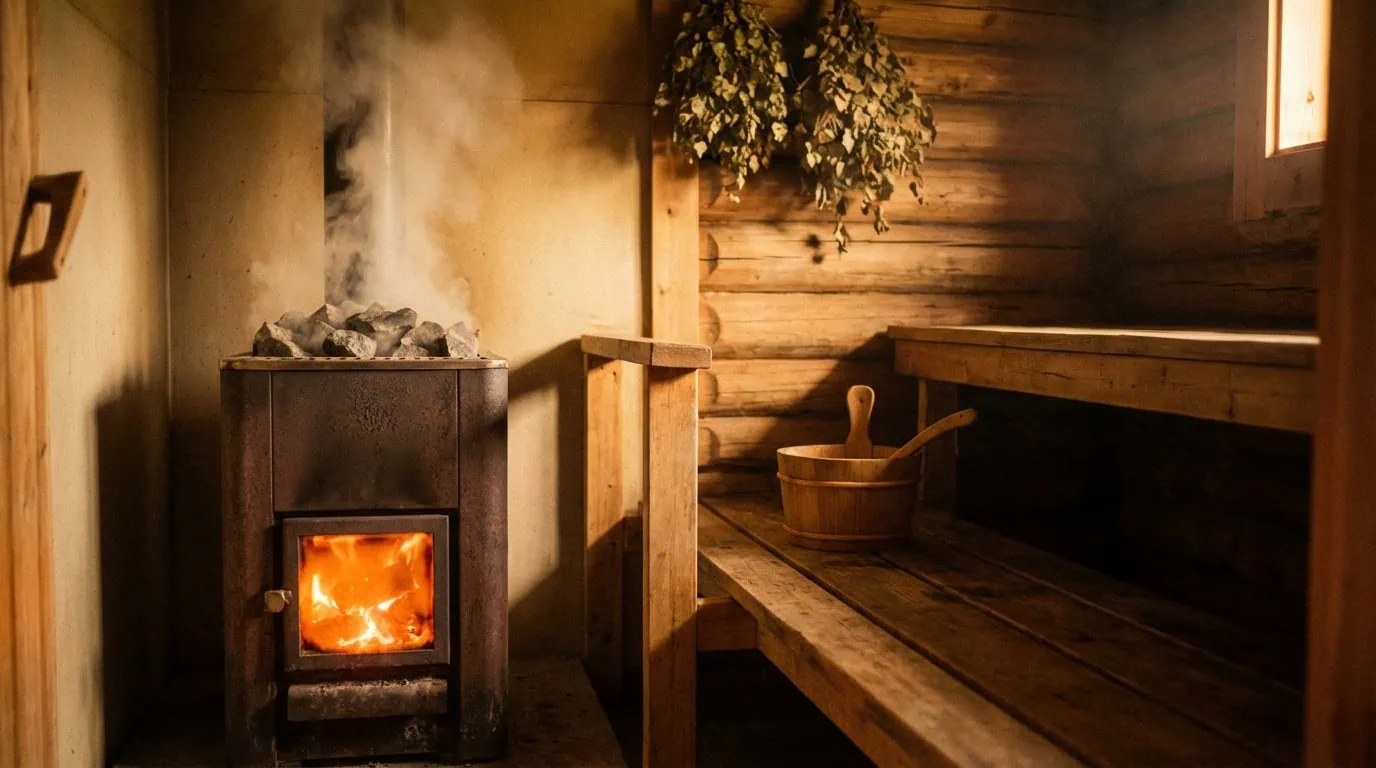
With a wood-fired stove, you hear it first. The crackle of birch logs. The scent of smoke mingling with cedar. You have been tending the fire for forty minutes, watching the stones glow red through the stove window. The sauna is not just ready. It has been earned.
Both will make you sweat. Both will raise your core temperature and trigger the cascade of benefits that bring you here. But the experience of getting there, and what that experience means to you, differs profoundly.
In this guide, you will learn:
- Why the heat source matters beyond mere temperature
- The practical realities of each option for your situation
- What Finnish tradition teaches about the soul of the sauna
- How to choose based on what you actually value
The Ritual vs The Switch
Before we compare specifications, here is what each choice represents.
The Wood-Fired Experience
Heating a wood-fired sauna is not a task. It is the beginning of the ritual.
Heating a wood-fired sauna is not a task. It is the beginning of the ritual.
You select the logs. You arrange them in the firebox. You light the kindling and watch the flames catch. For the next 30 to 60 minutes, you tend the fire, add wood, adjust the damper, and feel the stones slowly store their heat.
This time is not wasted. It is transition time. The demands of the day fall away with each log you add. By the time the sauna is ready, so are you.
The heat itself feels different. Wood fire creates a softer, more enveloping warmth. The temperature fluctuates gently as the fire breathes. When you pour water on the stones, the löyly (steam) carries a subtle smokiness that electric heat cannot replicate.
And there is the fire itself, visible through the stove window, alive and dancing. In a world of screens and notifications, there is something ancient about sitting with fire.
The Electric Experience
An electric sauna heater offers something equally valuable: simplicity.
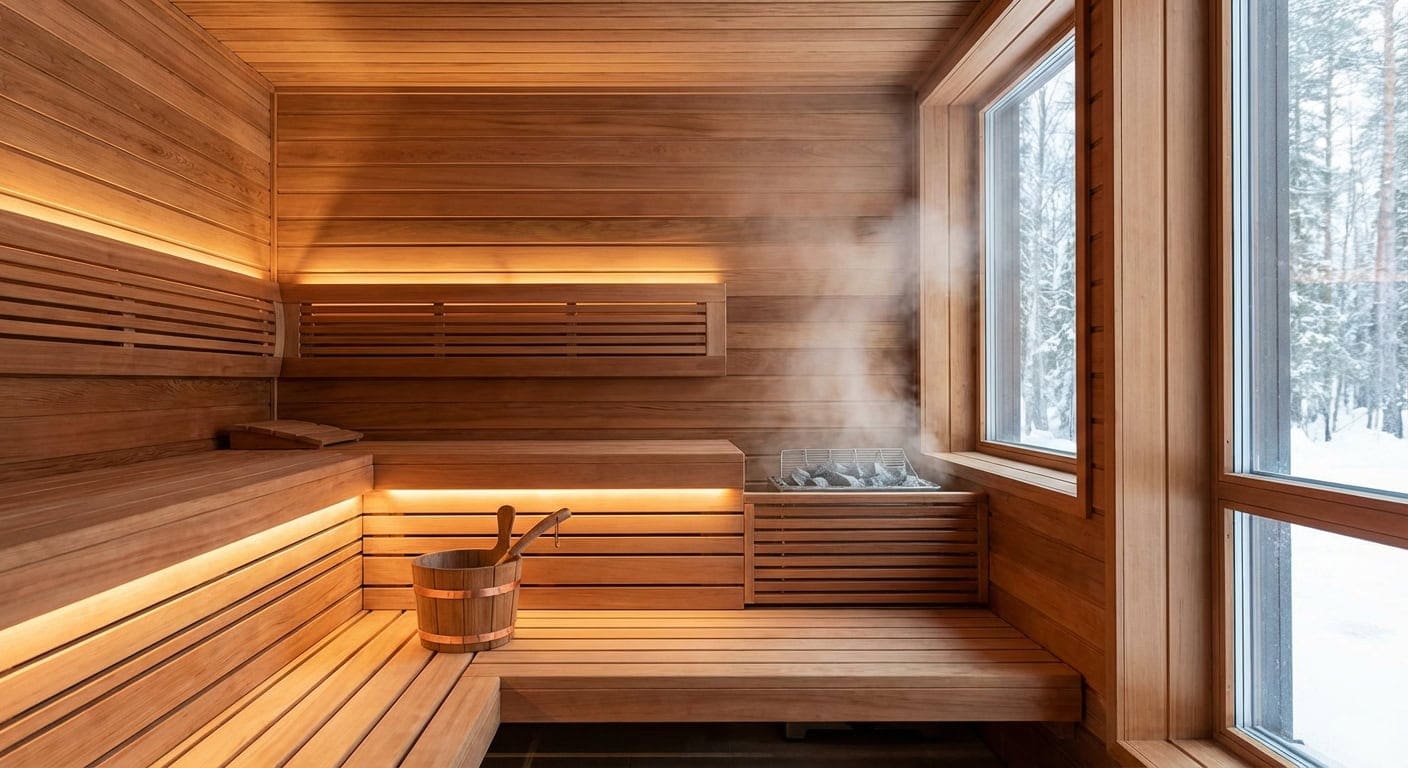
Press a button or set a timer. The heater warms the stones while you finish your day. Thirty to forty-five minutes later, consistent heat awaits. No wood to store, no ash to clean, no fire to tend.
For those who sauna daily, this matters. The practice becomes sustainable precisely because it requires nothing extra. You do not need to plan ahead or allocate tending time. The sauna fits into life rather than demanding rearrangement.
The heat is predictable. Temperature holds steady at your chosen setting. No hot spots, no cool moments as the fire dies. For those who prefer their rituals reliable, electric delivers.
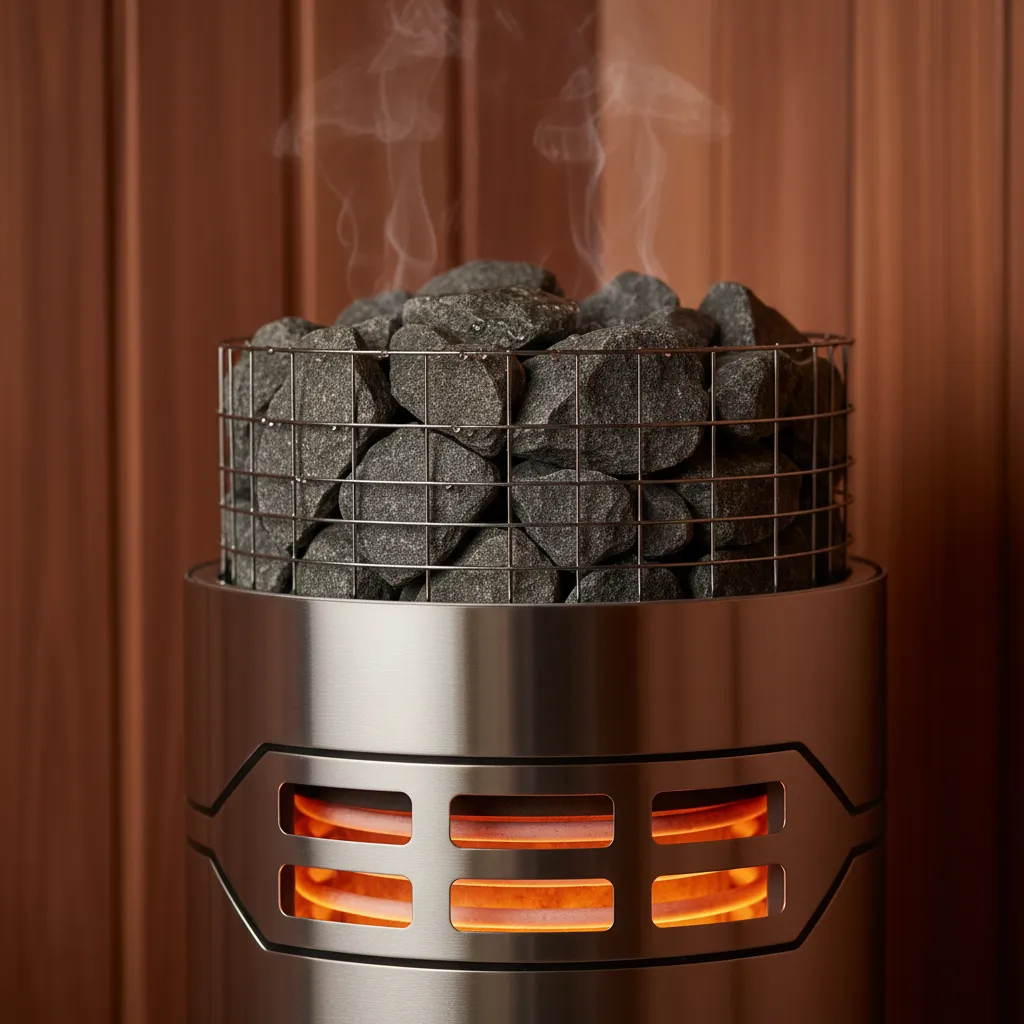
Modern electric heaters have become remarkably refined. Quality Finnish manufacturers like Harvia and Helo produce heaters that rival wood-fired stoves in stone mass and löyly quality. The technology has matured.
The Comparison
Here is what actually differs between these heat sources.
| Factor | Wood-Fired | Electric |
|---|---|---|
| Heat-Up Time | 45-90 minutes | 30-45 minutes |
| Heat Character | Fluctuating, soft, alive | Consistent, steady, predictable |
| Löyly Quality | Exceptional, often smoky | Excellent with quality heaters |
| Installation Cost | $2,000-$8,000 | $1,500-$5,000 |
| Operating Cost | $2-5 per session (wood) | $1-3 per session (electricity) |
| Maintenance | Chimney cleaning, ash removal | Minimal |
| Location Flexibility | Requires chimney/outdoor placement | Indoor installation common |
| Permits Required | Usually yes | Sometimes |
| Attention Required | Constant during heating | None |
| Off-Grid Capable | Yes | No |
Installation Realities
Wood-fired saunas need a chimney. This single requirement shapes everything else. Indoor installation requires proper flue routing through walls or roof. It is complex, expensive, and often prohibited in apartments or condos. Most wood-fired saunas sit outdoors or in detached buildings.
Building codes vary widely. Some jurisdictions treat wood-fired saunas like any wood stove; others impose additional requirements. Expect permit applications and inspections.
Electric saunas face simpler logistics. A 220V/240V circuit handles most heaters up to 9kW, sufficient for saunas up to about 450 cubic feet. Larger saunas need more power, but installation remains straightforward compared to chimney routing.
Indoor installation is standard. Ventilation requirements are modest. Permitting, when required at all, typically involves only electrical inspection.
The True Cost of Wood
Firewood costs vary dramatically by region. In forested areas, you might source wood for minimal cost. In urban settings, delivered hardwood runs $300 to $500 per cord. A cord might last 40 to 100 sessions depending on your sauna size and heating duration.
But cost is not the only consideration. You need dry storage space for at least a half-cord of wood. You need to manage ash disposal. You need chimney cleaning annually, or more often with frequent use.
The real cost of wood is time. Forty-five minutes of tending per session adds up. For daily users, that is over 250 hours per year spent heating. Some find this time meditative and valuable. Others find it impractical.
Electricity: The Hidden Equation
Electric operating costs are lower and more predictable. A 6kW heater running for 45 minutes uses about 4.5 kWh. At average US electricity rates, that is roughly $0.70 to $1.50 per session.
But there is a hidden consideration: electrical infrastructure. Older homes may lack sufficient panel capacity for a high-amperage sauna circuit. Panel upgrades cost $1,000 to $3,000. This is often the largest hidden cost of electric sauna ownership.

What Finland Teaches
The Finns have used both heat sources for centuries. What does their experience suggest?
Traditional Finnish saunas were universally wood-fired until the 1950s. The transition to electric began in urban apartments where wood burning was impractical. Today, about 90 percent of Finnish home saunas are electric, but wood-fired saunas retain special status.
Summer cottages (mökki) almost always feature wood-fired saunas. These are not compromises due to lack of electricity. They are deliberate choices. The Finnish word for sauna steam, löyly, originally meant "spirit" or "soul." Many Finns believe wood fire produces superior löyly, a claim that transcends measurement.
Public saunas and sauna societies often maintain wood-fired traditions. The famous Löyly sauna in Helsinki uses wood. The Rajaportti sauna, Finland's oldest public sauna, has burned wood continuously since 1906.
Yet Finnish sauna culture thrives with electric heaters too. The frequency of practice matters more than the heat source. A Finn who saunas daily with electric heat receives more benefit than one who saunas monthly with wood.
The Finnish lesson: wood-fired saunas offer something special, but electric saunas are not lesser. They are different tools for the same practice.
The Decision Framework
Let your circumstances and values guide you.
Choose Wood-Fired If:
- You have outdoor space for a sauna building
- Chimney installation is feasible and permitted
- You value the ritual of tending fire
- Off-grid capability matters to you
- You sauna 1-3 times per week (not daily)
- The heating process itself appeals to you
- You want the authentic Finnish cottage experience
- You already enjoy working with wood
Choose Electric If:
- You want indoor installation
- You plan to sauna daily or near-daily
- Convenience and consistency matter most
- You rent or may move within years
- Chimney installation is impractical or prohibited
- Minimal maintenance appeals to you
- You want to sauna spontaneously without planning
- Time is your scarcest resource
Consider Both If:
- You have a cottage or cabin in addition to a primary residence
- You want electric for regular use and wood-fired for special occasions
- Your sauna building can accommodate a combination heater
A Word on Combination Heaters
Some manufacturers offer heaters that burn wood and run on electricity. These hybrid units let you choose your heat source based on mood and circumstance. Electric for weekday sessions; wood-fired for weekend rituals.
Combination heaters cost more and require both chimney and electrical infrastructure. But for those who cannot choose, they eliminate the need to.
Quality Matters More Than Heat Source
Here is what matters most, regardless of which path you choose: buy quality.
A premium electric heater from Harvia or Helo will outperform a cheap wood stove. A well-designed wood-fired stove from a respected manufacturer will outlast and outperform a budget electric heater.
For wood-fired stoves, look for:
- Sufficient stone mass (80+ pounds for home saunas)
- Visible fire window (not required, but enhances experience)
- Quality steel construction (stainless or heavy gauge)
- Reputable manufacturer with parts availability
- Proper sizing for your sauna volume
For electric heaters, look for:
- Adequate power for your sauna size (1kW per 50 cubic feet as baseline)
- Quality stones included or available
- Safety certifications (ETL, UL, CE)
- Warranty of 5+ years on heating elements
- Established manufacturer with service network
Frequently Asked Questions
Does wood-fired produce better löyly than electric?
Many experienced sauna users believe so, though the difference is subtle with quality electric heaters. Wood fire heats stones more unevenly, which some argue creates better steam when water is poured. The psychological experience of fire also shapes perception. In blind tests, the difference is difficult to detect. In real use, the experience differs.
Can I convert from electric to wood-fired later?
Theoretically yes, but practically difficult. You would need to add a chimney, which is a major construction project. If wood-fired appeals to you, plan for it from the start.
Is one type safer than the other?
Both are safe when properly installed and used. Wood-fired saunas carry fire risk if chimneys are not maintained or if stoves are improperly installed. Electric saunas pose shock risk if wiring is faulty. Both require attention to carbon monoxide in enclosed spaces. Proper installation and maintenance matter more than heat source.
How long do the heaters last?
Quality electric heaters last 15 to 25 years with proper use. Elements may need replacement every 5 to 10 years depending on use frequency. Quality wood stoves last 20 to 40 years or longer. Cast iron components can last generations.
Can I use a wood-fired sauna in a residential neighborhood?
Check local ordinances. Many areas permit wood burning; some restrict it. Smoke can be a neighbor relations issue even where legal. Outdoor placement helps. If neighbor proximity concerns you, electric may be the diplomatic choice.
The Heart of the Matter
The choice between wood and electricity is ultimately a choice about what you value in the sauna experience.
If you crave simplicity, consistency, and the ability to sauna without forethought, electric serves beautifully. The practice becomes sustainable precisely because it demands nothing extra.
If you seek ritual, connection to tradition, and the alive quality of fire, wood offers something electric cannot replicate. The heating time becomes part of the experience rather than delay before it.
Neither choice is wrong. Both lead to the same destination: heat, sweat, stillness, and the particular clarity that comes from letting everything else go.
Close the door. Let everything go.
The heat will do the rest.
Thinking about a home sauna? Get our free buyer's guide: what it actually costs, what actually matters, and what everyone gets wrong. No sales pitch. Send me the guide.
2026 Buyer Snapshot
- Electric saunas win on convenience and repeatability; wood-fired wins on ritual depth, humidity control by feel, and atmosphere.
- For most urban users, installation constraints and daily friction determine long-term usage more than heater specs.
- Running costs vary by region, but electric tends to be more predictable while wood can be lower-cost where fuel is local.
At-a-Glance Comparison
| Factor | Wood-Fired | Electric |
|---|---|---|
| Startup convenience | Lower | Higher |
| Ritual/ambience | Very high | Medium |
| Precise temp control | Medium | High |
| Ongoing maintenance | Higher | Lower |
| Typical first-time owner friendliness | Medium | High |
Related Guides (Internal)
Methodology
These guides are built from manufacturer documentation, public specifications, primary research where health claims matter, and repeated buyer questions that show up in real ownership and installation decisions.
Manufacturer responses can clarify pricing bands, warranty terms, support footprint, or common mistakes. They do not move a page up the shortlist on their own.
Next Step
What to do next
Use one of these three paths. They are here to move the decision forward, not add more noise.
Want the full buyer path in your inbox? Five emails over three weeks.
Brand reviews for this guide
Sourced prices, warranty terms and buyer fit for the makers this guide compares.
Related Guides
Buying Guide • Sauna Brands
Best Finnish Sauna Brands (2026): Who's Actually Finnish
The best Finnish sauna brands for 2026: real prices, US availability, named weaknesses, and which 'Finnish' brands are actually Swedish or Estonian.
Buying Guide • Comparison
Sauna vs Steam Room: Cost, Heat and Which to Build
Sauna vs steam room compared on heat, humidity, build cost, maintenance, and health evidence, with a direct decision rule for home buyers.
Buying Guide • Comparison
Infrared vs Traditional Sauna for Recovery: Which Fits Best?
Infrared or traditional sauna for recovery? Buyer-first guidance on which sauna type makes more sense for soreness, training routine, and long-term use.