Sauna and Dry January: Finding Warmth in the Quiet
Why sauna and Dry January pair so naturally. Not a hack, not a fix - just a gentler way to find what you might be looking for.
Quick answer: Sauna works during Dry January because it fills the ritual slot the evening drink used to occupy, a fixed 20-minute wind-down with a clear end-of-day signal. The heat releases endorphins and gradually raises dopamine without the spike and crash alcohol produces. Evening sessions also deepen slow-wave sleep, which improves further once alcohol stops suppressing REM. It is not a cure for cravings or a hangover, just a sustainable replacement ritual.
Best for
People doing Dry January who miss the end-of-day ritual more than the alcohol itself.
Wrong fit
Anyone hoping to sweat out a hangover, which dehydrates you further and is genuinely dangerous.
Tradeoff
Sauna offers calm without the hangover, but it asks for what alcohol never did: showing up consistently, sober, and hydrated.
January arrives cold. The holidays fade. The lights come down. And if you have decided to step away from alcohol this month, you might notice something else: an absence. Not just of the drink itself, but of the ritual around it.
The pour at the end of a long day. The clink of glasses with friends. The warmth spreading through your chest.
We are not here to tell you that alcohol is bad or that you need fixing. We are here because you might be looking for something - a way to slow down, a moment of calm, a different kind of warmth - and the sauna has been offering exactly that for thousands of years.
The Ritual You Might Be Missing
Here is what nobody tells you about Dry January: the hardest part is not the alcohol itself. It is the empty space where the ritual used to be.
That moment at 6pm when you would reach for a glass. The Friday evening unwinding. The social glue of drinks with friends. These are not just habits. They are anchors in the day, small ceremonies of transition.
The sauna can fill that same slot. It gives you a clear end-of-day signal and a fixed 20-minute block that is yours, the way the 6pm drink used to be.
Your phone stays outside. For twenty minutes there is nothing to do but sit and let the heat work. It is a routine you can actually keep, which is the whole point in January.
This is not a replacement for the drink. It is its own thing entirely.
What the Heat Actually Does
When you sit in a sauna, your body responds in ways that might feel familiar.
Your heart rate rises, gently. Blood flows to your skin. Muscles release tension you did not know you were holding. And your brain begins producing endorphins - the same ones that create that sense of ease you might have been seeking elsewhere.
Research from the University of Eastern Finland, following thousands of people over decades, has found that regular sauna use is associated with better sleep, lower stress hormones, and improved mood. Not because it fixes anything broken, but because heat is one of the oldest forms of medicine we have.
The Finns have a saying: "The sauna is the poor man's pharmacy."
They were not being poetic. They were being practical.
Sleep That Actually Feels Like Rest
One of the first things people notice during Dry January is how their sleep changes. Without alcohol suppressing REM sleep, dreams return vivid and strange. Sleep becomes deeper, more restorative.
Sauna amplifies this. The drop in core body temperature after leaving the heat signals to your brain that sleep is coming. Studies show that sauna use in the evening can increase slow-wave sleep - the deep, dreamless kind where your body actually repairs itself.
Not a hack. Just biology.
Stress Without the Hangover
Here is what many of us are really looking for at the end of a hard day: a way to turn off the noise. A transition from doing to being. A few minutes where the mental chatter quiets down.
Alcohol does this, crudely and temporarily, by depressing your nervous system. The next morning, it often hands you back twice the anxiety you started with.
Sauna does something different. The heat activates your sympathetic nervous system - a gentle stress that your body knows how to handle. When you step out into the cool air, your parasympathetic system takes over. Rest and digest. Calm without the cost.
Some researchers call this "hormetic stress" - small challenges that make the body stronger. But you do not need to know the science to feel it. You step out of the sauna and something has shifted. The edge is gone.
The Dopamine Question
Here is something worth knowing: alcohol artificially spikes dopamine, then depletes it. This is part of why the days after drinking can feel flat and gray.
Sauna also releases dopamine, but differently. The heat gradually increases levels of this feel-good neurotransmitter, and the effect is gentler, more sustainable. You feel good without the crash.
This matters during Dry January because your brain is recalibrating. It is learning to find pleasure in things that do not come with a withdrawal period. The warmth of a sauna, the cold plunge after, the deep relaxation that follows - these are real pleasures that leave you feeling better, not worse.
A Different Kind of Social
One of the quiet losses of not drinking is social. So much of adult friendship happens over drinks. Happy hours, dinner parties, the casual "let us grab a beer." Without alcohol, these rituals can feel awkward, like showing up to a costume party without a costume.
The sauna offers another way to be with people.
In Finland, saunas are where families connect, where business deals are made, where friends sit together without the pretense of conversation. There is something about the heat that strips away small talk. You sit. You sweat. You do not have to perform.
If you have never been to a sauna with a friend, January might be the month to try. Many bathhouses and wellness centers offer exactly this: a space to be together without needing to fill the silence. Without needing a drink in your hand.
Just warmth. Just presence. Just time.
The Invitation
We are not here to tell you that sauna will fix everything or replace anything. It will not. It is not a hack for sobriety or a wellness optimization strategy.
It is just heat. Ancient, simple heat.
But if you are in the middle of a month where you are trying something different, looking for new rituals to fill the spaces that opened up, the sauna is worth knowing about.
Not as medicine. Not as treatment. Just as a warm room with a closed door, where you can sit for a while and let everything else wait.
The Finns have been doing this through dark winters for two thousand years. They were not optimizing anything. They were just finding ways to feel warm and human when the cold pressed in.
Maybe that is enough.
Frequently Asked Questions
Can I use the sauna if I am hungover?
If you slipped up during Dry January, the sauna is not a cure for a hangover. In fact, you should avoid it. Alcohol dehydrates you, and so does sweating. The combination can be dangerous. Wait until you are fully hydrated and feeling normal.
How often should I sauna during Dry January?
There is no prescription. Some people go daily, some once a week. Start with what feels good - maybe two or three times a week - and see how your body responds. The Finns average about once every few days.
Is there a best time of day?
Evening saunas tend to help with sleep. But any time you can make it a ritual is the right time. The consistency matters more than the clock.
Can sauna help with alcohol cravings?
We would not make that claim. What we can say is that sauna provides a genuine, sustainable source of relaxation and mood elevation. It fills time. It gives you something to do with your body. Whether that helps with cravings is personal, but many people find that having new rituals makes the transition easier.
What if I do not have access to a sauna?
Many gyms have saunas that go unused. Bathhouses exist in most cities. Some people invest in home saunas or infrared panels. Start with what is available. The ritual matters more than the perfection of the setup.
Close the Door
January is dark. The year is new. And maybe you are trying something different this month.
The sauna will be there. Not as a solution. Not as an answer. Just as a warm room where you can sit for a while, let the heat sink in, and remember that sometimes the simplest things are the most profound.
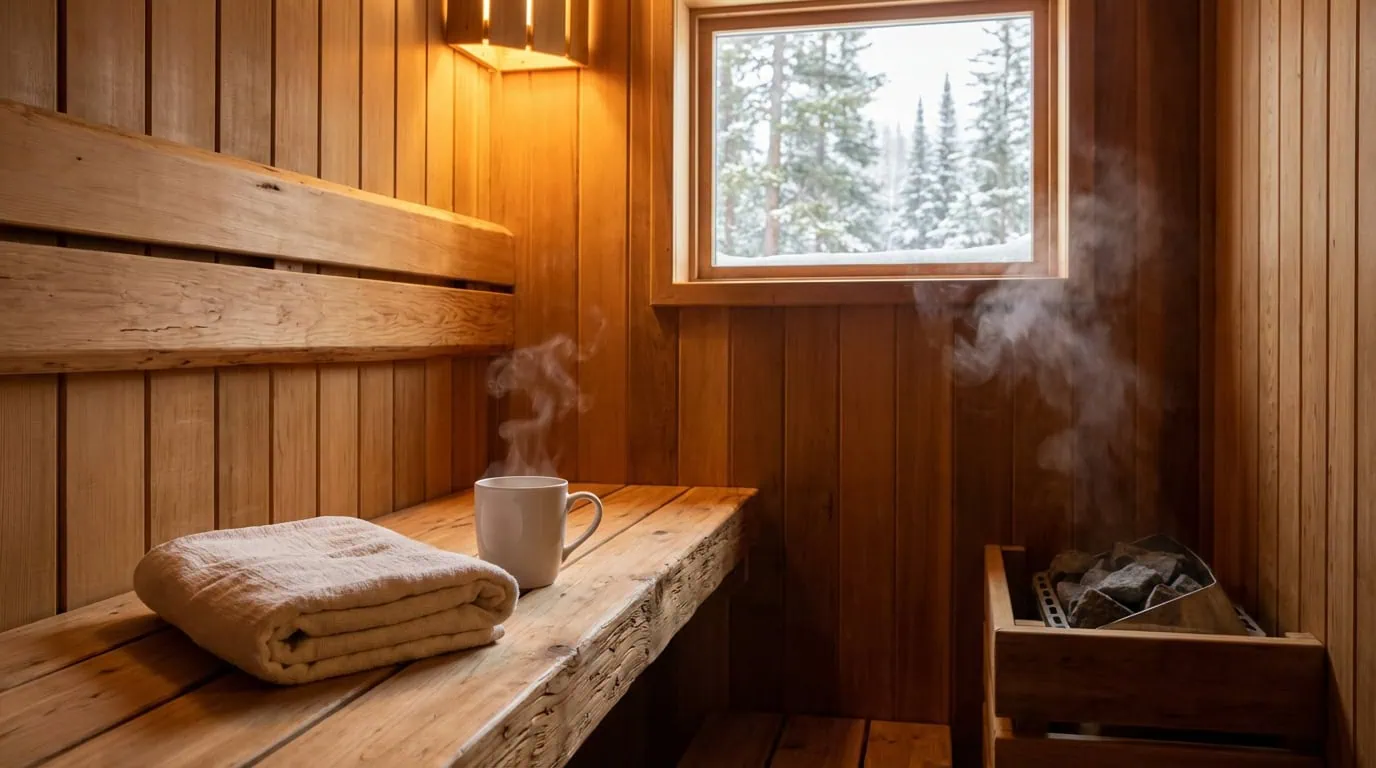
A closed door. Rising steam. Your own breath.
That is all it takes.
Thinking about a home sauna? Get our free buyer's guide: what it actually costs, what actually matters, and what everyone gets wrong. No sales pitch. Send me the guide.
Methodology
These guides are built from manufacturer documentation, public specifications, primary research where health claims matter, and repeated buyer questions that show up in real ownership and installation decisions.
Manufacturer responses can clarify pricing bands, warranty terms, support footprint, or common mistakes. They do not move a page up the shortlist on their own.