Sauna for Seniors: Benefits, Safety, and Practical Guidelines
Is sauna safe for seniors? Research shows major benefits for heart health, dementia prevention, and joint pain. Here's how older adults can sauna safely.
Quick answer: Sauna is safe for most healthy older adults, and the research case is strongest in this age group: Finnish men using a sauna 4-7 times weekly had a 63% lower risk of sudden cardiac death and a 66% lower dementia risk. Start at 140-160F (60-70C) for 10-15 minutes on the lower bench, stand up slowly, and review your medications with a doctor first, since blood pressure drugs and diuretics change how the body handles heat.
Best for
Older adults and their families who want sauna's cardiovascular and cognitive benefits with sensible safety adjustments.
Wrong fit
Anyone with unstable heart disease or an unreviewed medication list; get physician clearance before the first session.
Tradeoff
The strongest health evidence applies to exactly this age group, but medications, balance, and slower thermoregulation demand lower temperatures and shorter sessions.
Here is something that does not get said enough: some of the strongest sauna research we have was done on older adults. And the findings are remarkable.
A landmark Finnish study tracked over 2,300 middle-aged and older men for more than 20 years. Those who used the sauna four to seven times per week had a 63% lower risk of sudden cardiac death compared to those who went once a week. They also had significantly lower rates of dementia and Alzheimer's disease.
Age is not a reason to stop using the sauna. For many people, it is a reason to start.
But aging does change how your body handles heat. Medications, blood pressure changes, balance concerns, and slower thermoregulation all matter. This guide covers both sides: why sauna is especially valuable for older adults, and how to do it safely.
MEDICAL DISCLAIMER: This guide is for informational purposes only. If you take medications or have chronic health conditions, talk to your doctor before starting or continuing sauna use. This is not optional advice. It is essential.
TL;DR: The Quick Version
Sauna use is associated with significant cardiovascular and cognitive benefits in older adults
Start with lower temperatures (140-160°F / 60-70°C) and shorter sessions (10-15 minutes)
Sit on the lower bench. Stand up slowly. Always have water within reach.
Review your medications with your doctor. Blood pressure drugs, diuretics, and blood thinners can change how your body responds to heat.
Do not sauna alone if you have health conditions
Infrared saunas may be a gentler option for those who find traditional saunas too intense
The Benefits: Why Sauna Matters More as You Age
Heart Health
The cardiovascular benefits of sauna are well documented, and they are particularly relevant for older adults.
During a sauna session, your heart rate increases to 100-150 beats per minute. Blood vessels dilate. Blood flow increases. It is, in many ways, a passive cardiovascular workout. For people who have difficulty exercising due to arthritis, mobility limitations, or chronic pain, this is genuinely significant.
The Kuopio Ischemic Heart Disease Risk Factor Study (the Finnish study mentioned above) found that frequent sauna users had:
63% lower risk of sudden cardiac death
48% lower risk of fatal coronary heart disease
40% lower risk of all-cause mortality
These are not small numbers. And the study population included men in their 50s, 60s, and beyond.
A 2018 study published in BMC Medicine extended these findings to include women, with similar protective associations.
Dementia and Cognitive Health
This is perhaps the most exciting area of sauna research for older adults.
The same Finnish research group found that men who used the sauna four to seven times per week had a 66% lower risk of dementia and a 65% lower risk of Alzheimer's disease compared to those who went once a week (Laukkanen et al., 2017, published in Age and Ageing).
The mechanisms are not fully understood, but researchers point to improved cardiovascular function, reduced inflammation, lower blood pressure, and the release of heat shock proteins as potential pathways.
No drug on the market offers a 66% risk reduction for dementia. The sauna is not a guarantee, but it is a data point worth paying attention to.
Joint Pain and Arthritis
Heat has been used for joint pain for thousands of years, and there is good science behind it. Sauna use increases blood flow to muscles and joints, reduces stiffness, and provides temporary pain relief.
For seniors with osteoarthritis or rheumatoid arthritis, regular sauna sessions can complement other treatments. A study in Clinical Rheumatology found that infrared sauna therapy improved pain and stiffness in patients with rheumatoid arthritis and ankylosing spondylitis.
The warmth also promotes muscle relaxation, which can help with the chronic tension that often accompanies arthritis.
Mental Health and Social Connection
This one is easy to overlook, but it might be the most important for some people.
Loneliness and social isolation are serious health risks for older adults. The health impact of chronic loneliness has been compared to smoking 15 cigarettes a day. Community saunas, gym saunas, and spa saunas provide a reason to get out of the house, a social environment, and a shared ritual.
Sauna also triggers the release of endorphins and can reduce symptoms of depression and anxiety. Several studies have found mood improvements following sauna sessions, including a notable study showing that whole-body hyperthermia produced antidepressant effects lasting up to six weeks.
For older adults dealing with loss, retirement transitions, or reduced mobility, the sauna can be a genuine anchor in the week.
The Considerations: What Changes With Age
Medications
This is the most important section in this guide. Many older adults take medications that interact with heat exposure.
Blood pressure medications (ACE inhibitors, beta-blockers, calcium channel blockers) already lower blood pressure. Sauna also lowers blood pressure. The combination can cause excessive drops, leading to dizziness, fainting, or falls.
Diuretics increase fluid loss. Combined with sauna sweating, dehydration risk goes up significantly.
Blood thinners (warfarin, aspirin, newer anticoagulants) are common in older adults. While sauna does not directly interact with these drugs, the increased fall risk from dizziness and the bruising risk from falls are worth considering.
Diabetes medications can be affected by the increased circulation and blood flow that sauna produces.
Bottom line: Print out a list of your medications, bring it to your doctor, and ask specifically: "Is sauna safe for me given what I take?" This is a five-minute conversation that could prevent a serious problem.
For a comprehensive look at medication interactions, read our guide on when not to sauna.
Orthostatic Hypotension
This is the medical term for the lightheadedness you feel when you stand up too fast. It happens because blood pools in your lower body and your blood pressure drops momentarily.
Sauna makes this worse. Your blood vessels are dilated from the heat, which means blood pools more easily. Standing up quickly after a session is one of the most common causes of sauna-related falls in older adults.
The fix is simple: When your session ends, sit on the edge of the bench for 30 seconds. Then stand slowly, holding onto something stable. Wait until you feel steady before walking. Take your time getting to the shower or changing room.
Thermoregulation
As we age, our bodies become less efficient at regulating temperature. The sweat response slows down. The threshold for sensing "too hot" shifts. This means you may not feel as uncomfortable as you should at a given temperature, and your body may not cool itself as effectively.
This is why lower temperatures and shorter sessions are not just nice ideas for seniors. They are necessary adjustments.
Balance and Fall Risk
Wet floors. Dizziness from heat. Standing up too fast. Unfamiliar spaces. These are all fall risk factors, and they all come together in a sauna environment.
Practical steps:
Wear non-slip sandals or flip-flops outside the sauna room
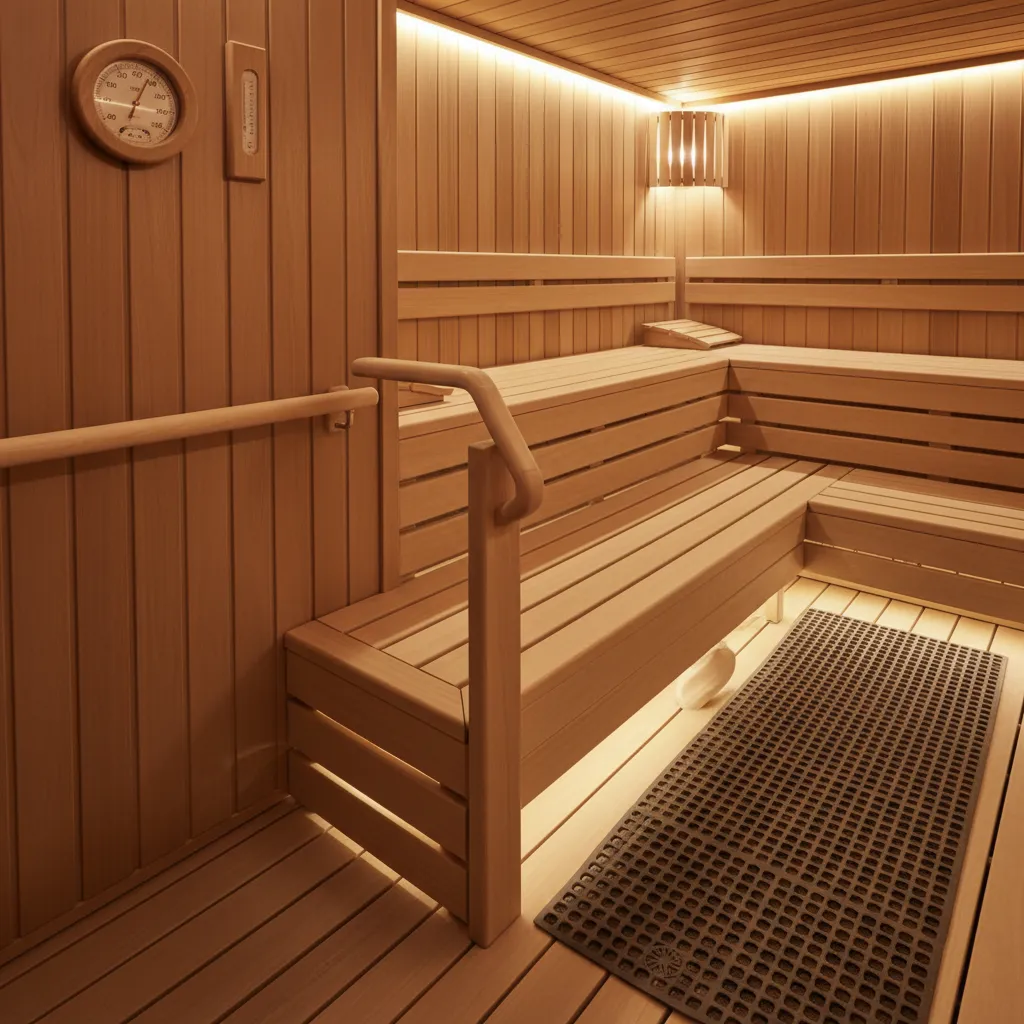
Use handrails where available
Sit on the lower bench so you do not have to climb
Consider a home sauna if balance is a significant concern
Never rush. There is nowhere you need to be.
Practical Guidelines for Seniors
Getting Started
If you are new to sauna, or returning after a long break:
Get medical clearance. Bring your medication list. Ask your doctor directly.
Start low and slow. 140°F / 60°C for 10 minutes on the lower bench.
Go with someone. At least for the first several sessions.
Hydrate well. A full glass of water before, water available during, and a glass after.
Listen to your body. If something feels wrong, leave. There is no prize for staying.
Building a Routine
Once you are comfortable:
Frequency: Two to three sessions per week is a good target. The Finnish research showed benefits at four to seven sessions per week, but any regular use is valuable.
Duration: Work up to 15-20 minutes if you feel good. No need to push beyond that.
Temperature: 140-160°F / 60-70°C is plenty. You can increase gradually if you want, but there is no evidence that hotter is better for health outcomes.
Cool-down: A lukewarm shower works well. Avoid ice-cold plunges unless you have experience with them and have discussed it with your doctor. The sudden temperature change can spike blood pressure.
The Session Routine
Here is a simple routine that works well for older adults:
Drink a glass of water
Shower before entering
Sit on the lower bench with a towel underneath you
Stay for 10-15 minutes (or less if you want)
Exit slowly. Sit on the edge first. Stand carefully.
Cool down with a lukewarm shower
Rest for 5-10 minutes, sitting down, with water
Optional: a second round if you feel good
Drink another glass of water
For more on temperature ranges and session structure, see our temperature guide.
Infrared vs. Traditional Sauna for Seniors
This is a common question, and there is no single right answer.
Traditional Finnish sauna operates at 150-195°F / 65-90°C. The heat is intense and comes from the air around you. Humidity can be adjusted by pouring water on stones. This is the type used in most of the research cited above.
Infrared sauna operates at 120-150°F / 49-65°C. The heat comes from infrared panels that warm your body directly rather than heating the air. The experience feels milder, and sessions can be longer.
For seniors, infrared saunas may be a better fit if:
You find traditional sauna temperatures uncomfortable
You have blood pressure concerns and want a gentler heat exposure
You have respiratory issues (infrared saunas have lower humidity)
You want to install a home unit (infrared saunas are smaller, use less power, and require no special ventilation)
Traditional saunas may be better if:
You enjoy the full sauna experience with steam and higher heat
You want the type of sauna that has the most research behind it
You have access to a well-maintained facility
Both types provide cardiovascular benefits, pain relief, and relaxation. The best sauna is the one you will actually use regularly.
Home Sauna: A Strong Option for Seniors
For older adults, a home sauna has real practical advantages:
No driving required. Especially important in bad weather or for those who no longer drive.
Accessibility. You can choose a model with easy entry, grab bars, and no steep steps.
Privacy. Use it on your own schedule, in your own comfort.
Consistency. When the sauna is 20 steps away, you are more likely to use it regularly.
Safety control. You set the temperature. You control the environment.
A two-person infrared sauna can fit in a spare room or large closet and plugs into a standard outlet. It is a reasonable investment for someone who plans to use it several times per week for years.
Frequently Asked Questions
Is sauna safe for people over 70?
Yes, for most healthy adults over 70. The Finnish research included participants well into their 70s and beyond. The key is to start with lower temperatures, shorter sessions, and to get medical clearance if you take medications or have chronic conditions. Age alone is not a contraindication.
Can sauna help with arthritis?
Heat therapy has a long track record for arthritis relief. Sauna increases blood flow to joints, reduces stiffness, and provides temporary pain reduction. Both traditional and infrared saunas have shown benefits in studies of rheumatoid arthritis and osteoarthritis. It is not a cure, but it can be a meaningful part of a pain management routine.
Should seniors avoid cold plunges after sauna?
The sudden temperature change from hot to cold can cause a rapid spike in blood pressure. For older adults, especially those with cardiovascular conditions or on blood pressure medication, this can be risky. A lukewarm shower is a safer cool-down option. If you do want to try cold exposure, discuss it with your doctor and start very gradually.
How often should seniors use the sauna?
Two to four times per week appears to be a sweet spot based on the research. Even once a week showed benefits compared to no sauna use. More important than frequency is consistency. A sustainable routine you maintain for years matters more than an aggressive schedule you abandon after a month.
Can sauna replace exercise for older adults?
No. Sauna provides some cardiovascular benefits similar to mild exercise, but it does not build muscle, improve bone density, or train balance and coordination. Think of sauna as a complement to exercise, not a replacement. For older adults who cannot exercise due to injury or disability, sauna is better than nothing, but it should not be the only form of physical activity if movement is possible.
Sources
Laukkanen, T., et al. "Sauna Bathing Is Inversely Associated with Dementia and Alzheimer's Disease in Middle-Aged Finnish Men." Age and Ageing, vol. 46, no. 2, 2017, pp. 245-249. The landmark study showing 66% lower dementia risk and 65% lower Alzheimer's risk with frequent sauna use.
Laukkanen, T., et al. "Association Between Sauna Bathing and Fatal Cardiovascular and All-Cause Mortality Events." JAMA Internal Medicine, vol. 175, no. 4, 2015, pp. 542-548. The Kuopio study demonstrating 63% lower risk of sudden cardiac death with 4-7 weekly sauna sessions.
Kunutsor, S.K., et al. "Sauna Bathing Reduces the Risk of Respiratory Diseases: A Long-Term Prospective Cohort Study." European Journal of Epidemiology, vol. 32, no. 12, 2017, pp. 1107-1111. Extended findings from the Kuopio cohort on respiratory health benefits.
Oosterveld, F.G., et al. "Infrared Sauna in Patients with Rheumatoid Arthritis and Ankylosing Spondylitis." Clinical Rheumatology, vol. 28, 2009, pp. 29-34. Study showing pain and stiffness improvements with infrared sauna therapy in arthritis patients.
Janssen, C.W., et al. "Whole-Body Hyperthermia for the Treatment of Major Depressive Disorder." JAMA Psychiatry, vol. 73, no. 8, 2016, pp. 789-795. Randomized trial demonstrating antidepressant effects of heat therapy lasting up to six weeks.
Final Thoughts
The sauna has been called the poor man's pharmacy. For older adults, the evidence suggests it might be one of the most underused health tools available. The cardiovascular benefits, the cognitive protection, the pain relief, and the simple pleasure of warmth and stillness.
You do not need to push hard. You do not need extreme temperatures. You just need to show up, sit down, and let the heat do its work.
Start with your doctor. Start with the lower bench. Start with ten minutes. See how it feels.
If you are just beginning your sauna journey, our safety guide covers the fundamentals for all ages.
Thinking about a home sauna? Get our free buyer's guide: what it actually costs, what actually matters, and what everyone gets wrong. No sales pitch. Send me the guide.
Methodology
These guides are built from manufacturer documentation, public specifications, primary research where health claims matter, and repeated buyer questions that show up in real ownership and installation decisions.
Manufacturer responses can clarify pricing bands, warranty terms, support footprint, or common mistakes. They do not move a page up the shortlist on their own.
Health and safety pages are written conservatively. When the safer answer is to slow down, get clearance, or skip the heat, that is the answer we give.