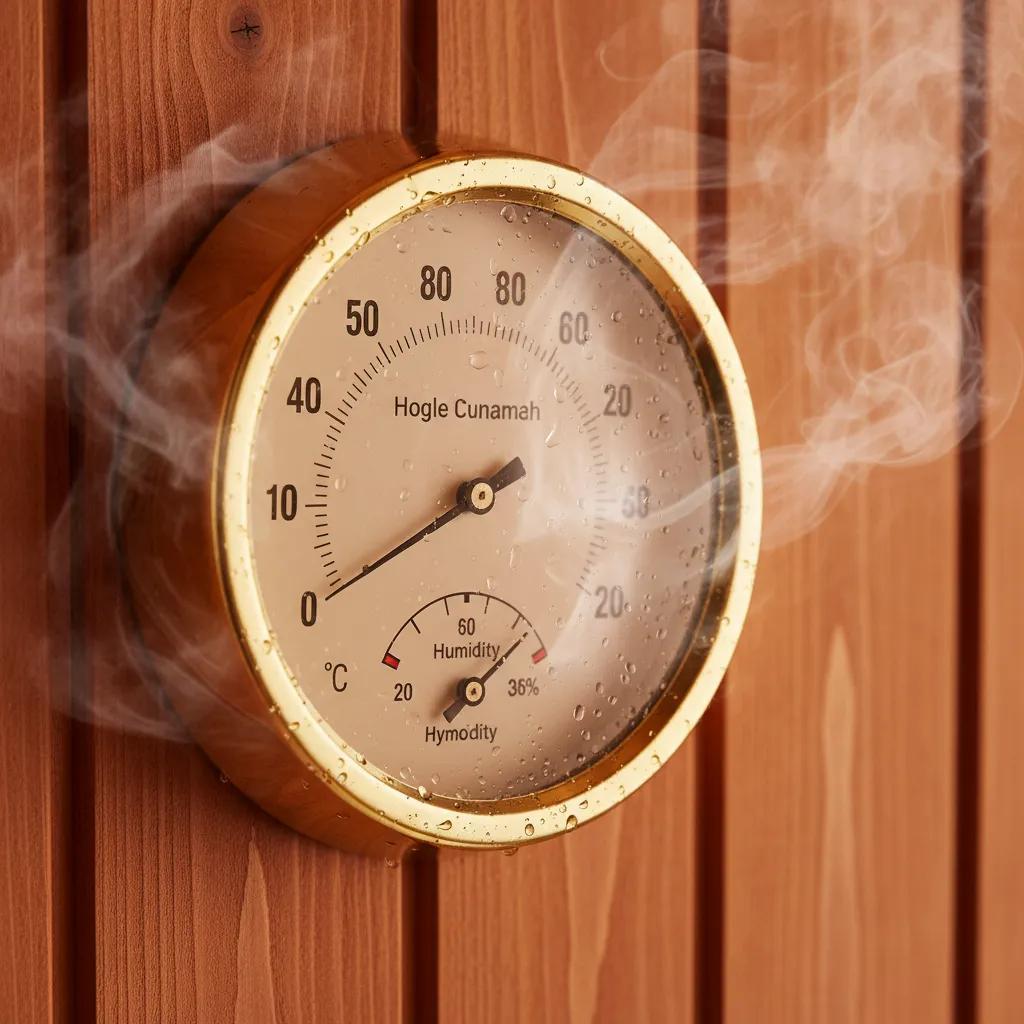
Sauna Temperature Guide: How Hot Should a Sauna Be?
What temperature should a sauna be? Ideal ranges for Finnish, infrared, and steam saunas. Bench height, humidity, beginner tips, and safety thresholds.
Quick answer: Traditional Finnish saunas run 150-212F (65-100C) with the sweet spot at 176-194F (80-90C) measured at head height; infrared cabins run 110-140F (43-60C) and steam rooms 104-122F (40-50C) at full humidity. Beginners should start around 150F (65C) for 5-10 minutes. Humidity changes everything: water on the stones can make 80C feel like 100C, and the top bench runs 20-30F hotter than the floor.
Best for
New sauna users and home sauna owners trying to find the right temperature instead of copying someone else's number.
Wrong fit
Anyone chasing extreme heat records; there is no health benefit above normal sauna temperatures.
Tradeoff
Hotter is not better: consistency and frequency drive the health outcomes far more than peak temperature does.
The first time you sit in a properly heated Finnish sauna, you notice something strange. The air feels soft. Almost gentle. Then you toss water on the stones and the room suddenly becomes a different place entirely.
That is temperature and humidity working together. And understanding how they interact is the difference between a sauna session that feels like a chore and one that feels like coming home.
This guide covers ideal sauna temperatures for every type, how to find your personal sweet spot, and when heat crosses from beneficial to dangerous. Whether you are building a home sauna, visiting one for the first time, or trying to figure out why 80 degrees Celsius feels completely different in two different rooms, you will find your answer here.
TL;DR: Sauna Temperature Ranges
Sauna Type
Temperature Range
Humidity
Best For
Traditional Finnish
150-212°F (65-100°C)
10-20% (dry), up to 40% with loyly
Deep heat, tradition, the full experience
Infrared
110-140°F (43-60°C)
Low (ambient)
Gentle heat, longer sessions, sore muscles
Steam Room
104-122°F (40-50°C)
100%
Skin, respiratory relief, lower heat tolerance
The most common "sweet spot" for a traditional sauna is 176-194°F (80-90°C) at head height, with occasional loyly (water on stones) to create bursts of steam.
If you are just starting out, 150°F (65°C) is a perfectly good place to begin. There is no prize for going hotter.
A steam room is the outlier in that table: much cooler air at 100 percent humidity, which feels hotter than the number suggests. For how that changes the build, cost, and health case, see dry sauna vs steam room.
Temperature Ranges by Sauna Type
Traditional Finnish Sauna: 150-212°F (65-100°C)
This is where sauna culture began. A wood-lined room, a pile of heated stones, and a ladle to throw water.
Most Finnish saunas operate between 176-194°F (80-90°C). This is the range where the heat is deep enough to raise your core temperature, increase your heart rate, and trigger a real sweat, but comfortable enough to sit for 10-20 minutes without distress.
At the higher end, 194-212°F (90-100°C), sessions tend to be shorter. Five to ten minutes. The heat is intense and immediate. This is where experienced sauna bathers often prefer to sit, but it is not where you need to start.
At the lower end, 150-170°F (65-77°C), the experience is gentler. You can sit longer. Your body still responds. Many people find this range more meditative, more sustainable, more enjoyable.
What the Finns actually do: Most home saunas in Finland run between 176-194°F (80-90°C). Public saunas sometimes push higher. The key is that nobody obsesses over the exact number. They heat the sauna, step inside, and adjust.
Infrared Sauna: 110-140°F (43-60°C)
Infrared saunas work differently. Instead of heating the air around you, infrared panels emit radiant energy that heats your body directly. The air stays cooler, but you still sweat. Often quite a lot.
The lower temperature makes infrared saunas approachable for people who find traditional heat overwhelming. Sessions tend to run longer, 30-45 minutes, because the air is breathable and comfortable.
Steam rooms operate at much lower temperatures than dry saunas. They have to. At 100% humidity, even 110°F (43°C) feels intense because your body cannot cool itself through evaporation.
The perceived heat in a steam room at 115°F can feel as intense as a dry sauna at 170°F. This is entirely about humidity, which we will get to next.
Why Humidity Changes Everything
Here is something that surprises most people: a sauna at 80°C (176°F) with dry air and the same sauna at 80°C with löyly (steam from water thrown on stones) feel like completely different temperatures.
Löyly can make 80°C feel like 100°C.
The reason is simple. In dry heat, your sweat evaporates and cools you down. When the air is saturated with moisture, evaporation slows dramatically. Your body loses its primary cooling mechanism. The heat presses in and stays.
This is why experienced Finnish bathers control the session with loyly rather than adjusting the thermostat. You heat the room to a comfortable baseline, then modulate intensity by adding steam. A gentle toss. A full splash. The stones hiss, the wave of heat rolls across the room, and for a few seconds everything intensifies.
It is also why bench height matters more than most people realize.
Bench Height and Temperature Stratification
Hot air rises. In a sauna, this creates significant temperature layers.
The difference between the floor and the ceiling of a typical sauna is 20-30°F (10-15°C). Sometimes more. This means the top bench and the lower bench are genuinely different experiences.
Position
Approximate Temperature (if thermostat reads 180°F / 82°C)
Ceiling
195-210°F (90-99°C)
Top bench (head height)
176-185°F (80-85°C)
Lower bench
155-165°F (68-74°C)
Floor level
140-150°F (60-65°C)
Practical takeaway: If the top bench feels too intense, move down. You do not need to leave the sauna. The lower bench is a completely valid place to sit. Many people start low and move up as their body acclimates.
This is also why lying flat on the top bench creates a more even heat experience. Your whole body is in the same temperature zone. When you sit upright, your head is in hotter air than your feet.
And it matters for thermometer placement. A thermometer on the wall near the floor will read 20-30 degrees lower than one at head height. Always measure at head height to know what your body is actually experiencing.
Beginner Temperature Progression
If you are new to sauna, there is no reason to start at the top. A gradual approach feels better and works just as well.
Week 1-2: Start gentle
Temperature: 150-160°F (65-71°C), or lower bench in a hotter sauna
Duration: 5-10 minutes per session
Sessions: 1-2 per week
No loyly yet. Just dry heat.
Week 3-4: Build comfort
Temperature: 160-170°F (71-77°C)
Duration: 10-15 minutes
Sessions: 2-3 per week
Try a small splash of loyly if you are in a traditional sauna
Week 5-8: Find your range
Temperature: 170-185°F (77-85°C)
Duration: 15-20 minutes
Sessions: 3-4 per week
Experiment with loyly and bench positions
Beyond: Your sweet spot
Most regular bathers settle somewhere in the 176-194°F (80-90°C) range
Session length and frequency matter more than pushing temperature
For a more complete walkthrough of your first sessions, our beginner's guide covers everything from what to bring to how to breathe.
The Finnish Sweet Spot: 176-194°F (80-90°C)
There is a reason this range keeps coming up. It is where the science and the tradition converge.
At 80-90°C, your core body temperature rises by 1-2°C over a 15-20 minute session. Your heart rate increases to 100-150 beats per minute, similar to moderate exercise. Growth hormone production increases. Heat shock proteins activate. Blood flow to the skin increases dramatically.
This is the range used in most of the major sauna health studies, including the landmark Kuopio Ischaemic Heart Disease study that tracked 2,315 Finnish men over 20 years. The cardiovascular benefits, the reduced mortality risk, the mental health improvements. They were observed at these temperatures.
For more on what happens in your body at these temperatures, our sauna benefits science guide goes deep on the research.
But here is the thing worth remembering: the Finns did not arrive at this range through research papers. They arrived at it through centuries of practice. It is the temperature where heat feels deep and meaningful without being punishing. Where you can sit long enough to actually let go.
Competition Sauna Temperatures: A Warning
Between 1999 and 2010, the World Sauna Championships were held in Heinola, Finland. Competitors sat in saunas heated to over 230°F (110°C) with regular loyly, trying to outlast each other.
The competition ended permanently in 2010 when a finalist died and another was critically injured.
These temperatures are dangerous. Above 212°F (100°C) with humidity, the human body cannot maintain safe core temperature. Burns, organ failure, and death are real risks.
There is no health benefit to extreme temperatures. The research shows benefits at normal sauna temperatures. Going hotter does not mean going better. The sauna is a practice, not a competition.
Heater Types and Temperature Consistency
How your sauna is heated affects the quality of heat, not just the number on the thermometer.
Wood-burning stoves produce a soft, radiant heat with natural temperature fluctuations. The stones hold heat well and produce excellent löyly. Many sauna enthusiasts consider this the gold standard. Temperature control is manual and imprecise, which is part of the charm.
Electric heaters offer precise thermostat control and consistent temperatures. They heat quickly and maintain a steady environment. Most modern home saunas and commercial saunas use electric heaters. Löyly quality depends on the stone mass. More stones generally mean better steam.
Gas heaters are less common but heat large saunas efficiently. Temperature control is good, similar to electric.
Infrared panels do not heat stones or air in the traditional sense. There is no loyly. The experience is fundamentally different, and the temperature numbers are not directly comparable to traditional saunas.
The best heater is the one that matches your expectations. If you want the traditional Finnish experience with loyly, you want a stove (wood or electric) with a generous amount of stones. If you want precise control and gentle heat, infrared works well.
How to Measure Sauna Temperature Properly
Most people put their thermometer in the wrong place. Here is how to do it right.
Place your thermometer at head height on the upper bench. This is the temperature your body actually experiences during a session. A thermometer near the floor or on the opposite wall from the heater will read significantly lower and give you a misleading picture.
A few more tips:
Use a sauna-rated thermometer. Standard household thermometers may not handle the heat. Look for ones rated to at least 250°F (120°C).
Give it time. Thermometers need 20-30 minutes after the sauna reaches temperature to give an accurate reading.
Measure humidity too. A hygrometer alongside your thermometer tells a more complete story. Some sauna thermometers include both.
Digital vs. analog. Analog thermometers tend to be more reliable in sauna conditions. Electronics can struggle with sustained high heat.
When Temperature Matters Less Than You Think
After all these numbers, here is a truth that experienced sauna bathers already know: consistency matters more than intensity.
A person who uses a 160°F sauna four times a week will likely see more health benefits than someone who sits in a 200°F sauna once a month. The research supports this. Frequency and duration drive outcomes far more than peak temperature.
So if your sauna only reaches 160°F, or you prefer the lower bench, or infrared is what you have access to. That is fine. That is good, actually. The best sauna temperature is the one that makes you want to come back tomorrow.
For more on finding the right frequency, our guide on how often to use a sauna breaks down the research by goal.
Safety Thresholds: When Heat Becomes Dangerous
Sauna bathing is remarkably safe for healthy adults. But there are limits worth knowing. For a complete overview, our sauna safety guide covers all the details, and our guide on when not to sauna addresses specific medical conditions.
General safety guidelines:
Stay hydrated. Drink water before, during, and after. A typical session can produce 0.5-1 liter of sweat.
Listen to your body. Dizziness, nausea, or a racing heartbeat that feels wrong are signals to leave immediately.
Avoid alcohol. Alcohol plus sauna is a leading cause of sauna-related injuries and deaths, particularly in Finland.
Time limits. At normal temperatures (80-90°C), most people should limit sessions to 15-20 minutes. At higher temperatures, shorter.
Cool down gradually. After the sauna, let your body return to normal temperature before strenuous activity.
Medical conditions. If you have cardiovascular issues, are pregnant, or take medications that affect blood pressure or heart rate, talk to your doctor first.
The danger zone: Sustained exposure above 212°F (100°C) with high humidity is dangerous for everyone, regardless of experience. Your body simply cannot regulate its temperature under those conditions. Never push through severe discomfort. The sauna will be there tomorrow.
Frequently Asked Questions
What is the ideal sauna temperature for beginners?
Start at 150-160°F (65-71°C) or sit on the lower bench of a hotter sauna. Stay for 5-10 minutes. There is no benefit to pushing through discomfort as a beginner. Build gradually over weeks.
Is hotter always better in a sauna?
No. The major health studies show benefits at 80-90°C (176-194°F), which is standard Finnish sauna temperature. Going hotter does not increase benefits and increases risk. Consistency and frequency matter far more than peak temperature.
What temperature is too hot for a sauna?
For a traditional sauna, temperatures above 212°F (100°C) are entering dangerous territory, especially with humidity. Competition saunas at these levels have caused deaths. There is no health reason to exceed 200°F.
Why does my sauna feel hotter than the thermometer says?
Likely because of humidity. Throwing water on the stones (loyly) dramatically increases perceived heat without changing the air temperature much. Also check where your thermometer is placed. If it is near the floor, the actual temperature at bench height is significantly higher.
What temperature should an infrared sauna be?
Infrared saunas work best between 110-140°F (43-60°C). They heat your body directly rather than the air, so lower air temperatures still produce a strong sweat response. Most people find 125-135°F (52-57°C) comfortable for a 30-40 minute session.
How long should I stay in the sauna at different temperatures?
At 150-170°F (65-77°C), sessions of 15-20 minutes are comfortable for most people. At 176-194°F (80-90°C), 10-20 minutes is typical. Above 194°F (90°C), keep sessions under 10-15 minutes. Always leave when your body tells you to, regardless of the clock.
Does sauna temperature affect heart rate?
Yes. Your heart rate increases as the sauna gets hotter and as you stay longer. At typical sauna temperatures, heart rates of 100-150 bpm are normal. This is part of why sauna bathing provides cardiovascular benefits similar to moderate exercise.
Sources
Laukkanen, T., et al. "Association Between Sauna Bathing and Fatal Cardiovascular and All-Cause Mortality Events." JAMA Internal Medicine, vol. 175, no. 4, 2015, pp. 542-548. The Kuopio Ischemic Heart Disease study establishing cardiovascular benefits at 80-90°C sauna temperatures over 20 years.
Laukkanen, T., et al. "Cardiovascular and Other Health Benefits of Sauna Bathing: A Review of the Evidence." Mayo Clinic Proceedings, vol. 93, no. 8, 2018, pp. 1111-1121. Comprehensive review of sauna health research including temperature-dependent physiological responses.
Hannuksela, M.L., and Ellahham, S. "Benefits and Risks of Sauna Bathing." The American Journal of Medicine, vol. 110, no. 2, 2001, pp. 118-126. Review of temperature safety thresholds, heat stratification, and risks at extreme temperatures.
Finnish Sauna Society (Suomen Saunaseura), "Sauna Temperature and Humidity Guidelines." Traditional Finnish guidelines for optimal sauna temperatures, loyly practice, and thermometer placement.
Kukkonen-Harjula, K., and Kauppinen, K. "Health Effects and Risks of Sauna Bathing." International Journal of Circumpolar Health, vol. 65, no. 3, 2006, pp. 195-205. Finnish research on heat stratification, humidity effects, and safe exposure limits.
Final Thoughts
The best sauna temperature is personal. It depends on your experience, your sauna type, the humidity, the bench height, and how your day has been.
Start where it feels good. Build from there. Pay attention to how loyly changes the room. Notice the difference between the top bench and the lower one. Over time, you will stop checking the thermometer entirely. You will just know.
That is when the sauna stops being a health intervention and starts being a practice.
Close the door. Let everything go.
Thinking about a home sauna? Get our free buyer's guide: what it actually costs, what actually matters, and what everyone gets wrong. No sales pitch. Send me the guide.
Methodology
These guides are built from manufacturer documentation, public specifications, primary research where health claims matter, and repeated buyer questions that show up in real ownership and installation decisions.
Manufacturer responses can clarify pricing bands, warranty terms, support footprint, or common mistakes. They do not move a page up the shortlist on their own.
Health and safety pages are written conservatively. When the safer answer is to slow down, get clearance, or skip the heat, that is the answer we give.
Want the full buyer path in your inbox? Five emails over three weeks.
When you are ready to buy
This guide is about using a sauna. When the question becomes which one to buy, these profiles are the shortest route: sourced prices, warranty terms and who each brand actually fits.