Outdoor Sauna With No Electricity: Wood vs Propane vs Solar
How to run an outdoor sauna with no electricity. Wood-fired, propane, and solar-assisted setups compared, real costs, and which one fits your site.
Quick answer: For a true no-electricity outdoor sauna, a wood-fired heater is the proven answer: real löyly, no power, lowest running cost, but it needs tending and a safe chimney. Propane is the convenience option with a fuel bill and a tank to manage. Solar realistically powers lights and a fan, not the heat itself. Most off-grid buyers should go wood-fired.
Best for
Buyers with a cabin, acreage, or a yard where running a 240V circuit is impractical or expensive, who want a real outdoor sauna anyway.
Wrong fit
Buyers who want push-button convenience and already have easy access to power. An electric heater is simpler for them.
Tradeoff
Going off-grid trades electrical cost and dependence for fuel handling and fire management. Wood-fired gives the best experience for the lowest running cost, but it asks for your time and attention every session.
The reason most outdoor saunas need electricity is the heater. Solve the heater without a wire and the rest of the project is straightforward. There are three real ways to do that, and only two of them actually heat the room.
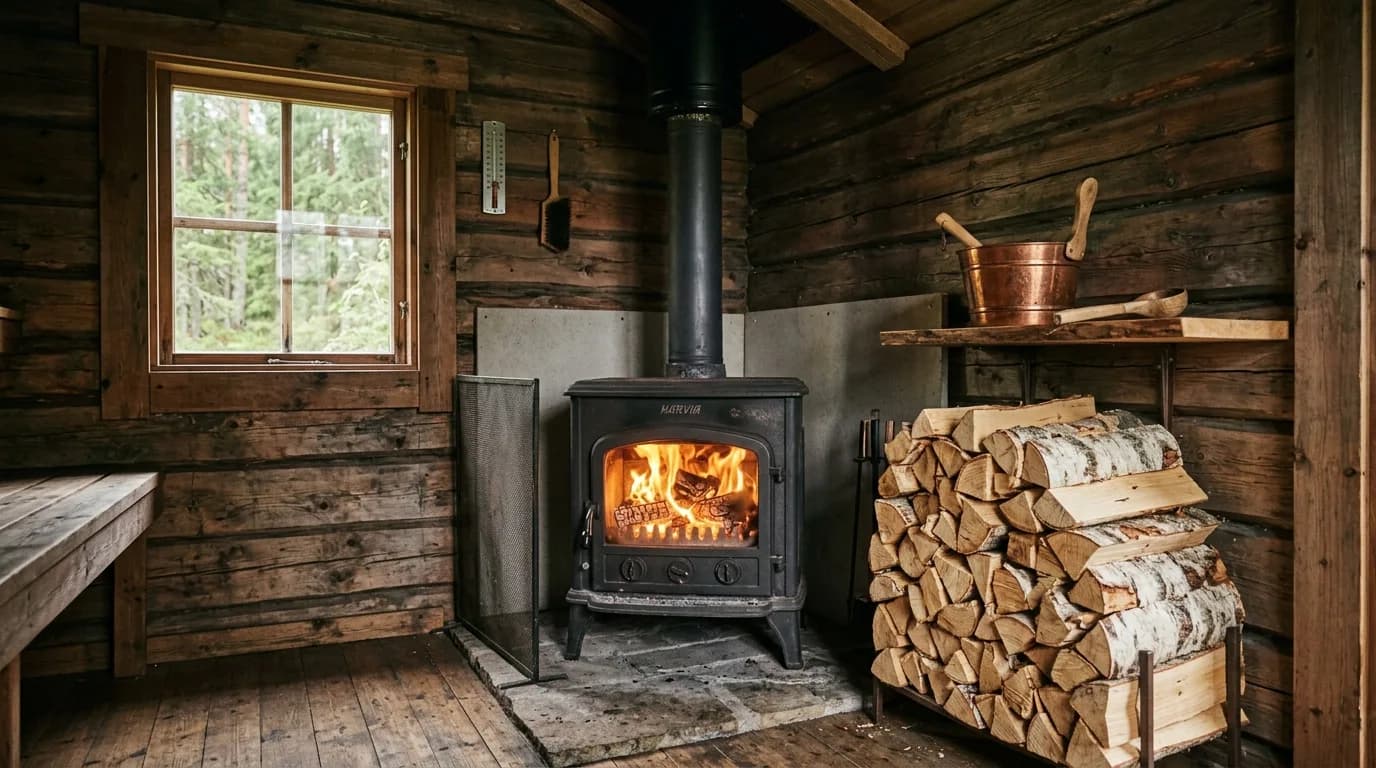
A wood-fired sauna stove is the original no-electricity sauna and still the best one. It produces real, deep heat and excellent löyly when you ladle water on the rocks. It needs no power at all, and once you have a firewood supply the running cost is close to nothing.
The tradeoffs are real and you should accept them before buying:
It takes tending. You build and feed a fire, and the room takes 30 to 60 minutes to come up to temperature. This is part of the ritual for many owners and a chore for others. Be honest about which you are.
It needs a safe chimney and clearances. A wood stove means a flue, spark arrestor, and proper clearance from combustible walls and roof. This is the part most DIY off-grid builds get wrong.
It needs fire-safe siting. Distance from the house, the fence, and dry brush matters, and many jurisdictions have specific rules.
Brands with credible wood-fired outdoor lines include Almost Heaven Saunas on the cabin and barrel side and, on the portable end, SweatTent. Redwood Outdoors no longer offers wood-fired models, its kits now ship with Harvia electric heaters. For the structure under it, see the outdoor sauna foundation guide.
Propane: convenience without a wire
A propane (LP gas) sauna heater gives you full sauna heat with the convenience of an electric unit and no electrical circuit. You turn it on, it heats, you do not tend a fire.
The cost of that convenience:
A fuel bill and a tank. You are buying and storing propane and managing tank swaps or refills.
Combustion and ventilation requirements. A gas appliance needs correct combustion air and venting. This is not a DIY guess. Follow the manufacturer's spec exactly.
Fewer models. The gas outdoor sauna market is smaller than wood-fired or electric, so selection is narrower.
Propane is the right call for an off-grid buyer who wants real heat but does not want to tend a fire every session.
Solar: powers accessories, not the heat
This is where buyers get misled. A residential solar setup that could actually run a sauna heater for a full session is a large, expensive battery and panel array, not a small kit. For practical purposes, treat solar as a way to power lights, a ventilation fan, a sound system, or a small control panel, not as the heat source.
The realistic off-grid setup is wood-fired or propane heat, with a small solar panel and battery handling the lights and fan. That combination genuinely needs zero grid electricity and works.
Before you buy: the off-grid siting checklist
1. Confirm the heat source against your real tolerance for tending
If a 30 to 60 minute fire build is a pleasure to you, wood-fired is ideal. If it is a barrier you will resent, choose propane. This single honest answer decides most off-grid builds.
2. Plan the chimney or vent properly
Wood-fired needs a code-compliant flue, spark arrestor, and clearances. Propane needs correct combustion air and venting. Neither is the place to improvise.
3. Check fire and setback rules
Call the local building or fire authority. Many areas have specific setbacks for solid-fuel and gas appliances, and some have seasonal burn restrictions that affect a wood stove.
Believing solar can run the heater. It cannot, at any realistic home scale. Solar runs the accessories. Wood or propane runs the heat.
Improvising the chimney or gas venting. This is the genuine safety risk in off-grid builds. Follow manufacturer and code specs exactly, or hire it out.
Underestimating the tending of wood-fired. Buyers who wanted convenience and bought wood-fired end up frustrated. Match the heat source to your honest patience.
Ignoring setbacks and burn rules. A beautiful off-grid sauna that violates a fire setback is a removal order, not a sauna.
If you want the best off-grid experience for the lowest running cost and you genuinely enjoy a fire, go wood-fired. It is the proven answer and the löyly is excellent.
If you want real heat without tending a fire, go propane and budget for the fuel and the tank.
Use solar for the lights and the fan, not the heat. Anyone selling you a solar sauna heater for a normal yard is selling you a disappointment.
FAQ
Can you have an outdoor sauna with no electricity at all?
Yes. A wood-fired heater needs zero electricity and delivers full traditional heat and löyly. A propane heater also needs no electrical circuit. Pair either with a small solar panel for lights and a fan and the whole sauna runs off-grid.
Is wood-fired or propane better for an off-grid sauna?
Wood-fired has the lowest running cost and the most authentic experience, but it needs a fire built and tended every session. Propane is push-button convenient with no fire to manage, but you pay for fuel and handle a tank. Choose by how much tending you actually want to do.
Can solar power run a sauna heater?
Not at any realistic home scale. The battery and panel array needed to run a sauna heater for a full session is large and expensive. Solar is best used for the lights, fan, and small accessories while wood or propane provides the heat.
What is the biggest safety issue in a no-electricity sauna?
The chimney or gas venting. Wood-fired needs a code-compliant flue, spark arrestor, and clearances from combustibles. Propane needs correct combustion air and venting. Both must follow manufacturer and local code exactly, and this is not the place to improvise.
Does an off-grid sauna still need a permit?
Often yes. Solid-fuel and gas appliances commonly have setback and venting rules, and some areas have seasonal burn restrictions. Call the local building or fire authority before you build, the same as any outdoor sauna.
These guides are built from manufacturer documentation, public specifications, primary research where health claims matter, and repeated buyer questions that show up in real ownership and installation decisions.
Manufacturer responses can clarify pricing bands, warranty terms, support footprint, or common mistakes. They do not move a page up the shortlist on their own.