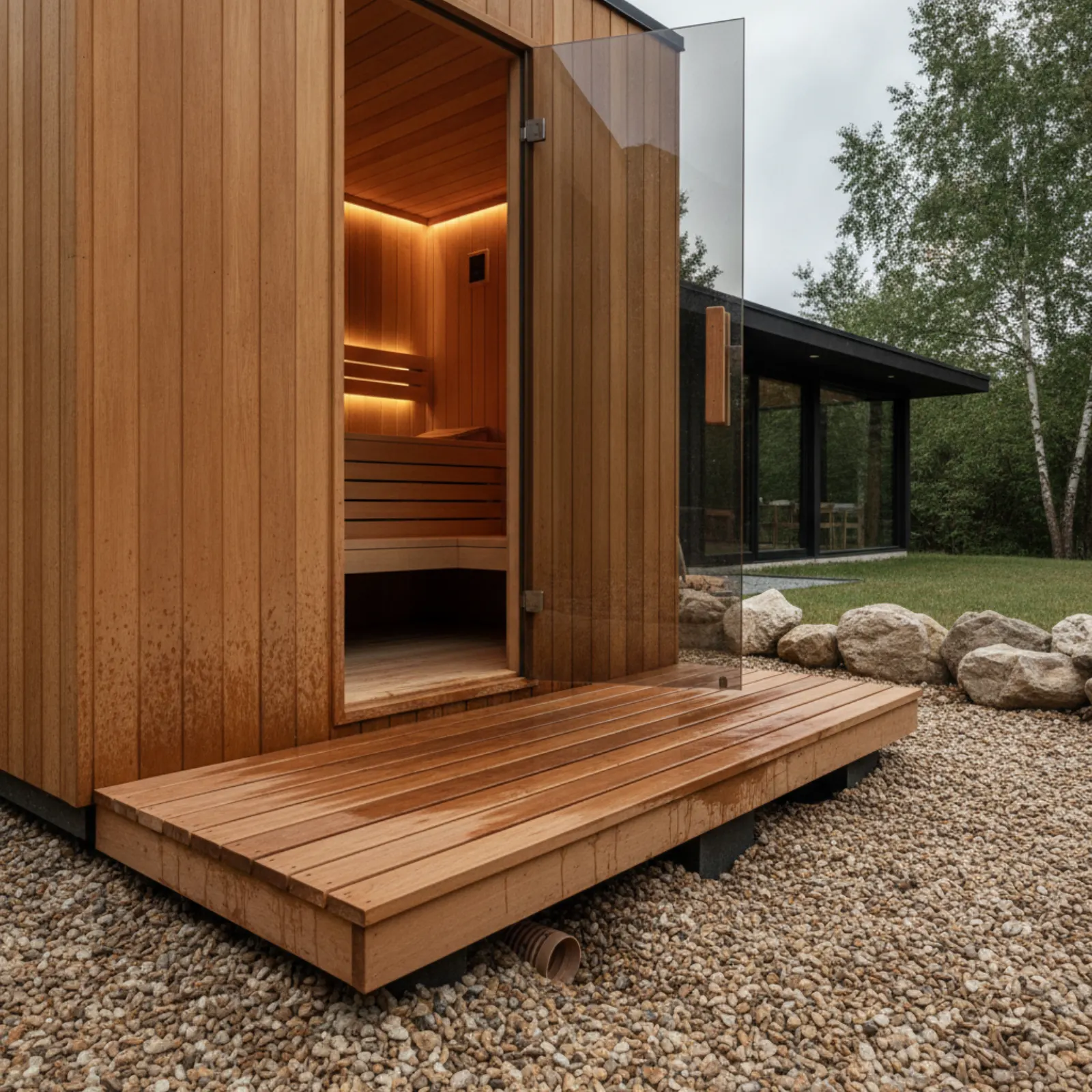
Outdoor Sauna Drainage: The Site Detail That Protects the Build
How outdoor sauna drainage affects foundation, wood life, ice, cleaning, runoff, shower placement, and where buyers should ask questions before delivery.
Installation
Quick answer: An outdoor sauna needs water moving away from the base and a practical plan for rain, snowmelt, cleaning water, and any shower or plunge runoff. Drainage is part of the foundation decision.
Best for
Buyers planning a backyard sauna, barrel sauna, cabin sauna, or sauna-plus-plunge area.
Wrong fit
Commercial bathhouse drainage or permitted plumbing design.
Tradeoff
The cheapest pad can become expensive if water sits under the sauna.
Bad drainage is the slowest expensive mistake in outdoor sauna ownership. Nothing fails on delivery day. Then the pad settles, the door stops latching, and the bottom row of boards sits in mud every March.
Here is the money side. Grading the spot and building a proper gravel pad usually lands in the $400 to $1,500 site-prep range, the same bucket we break down in the home sauna cost guide. Fixing a sauna that spent two winters in standing water means jacking up a building that can weigh over 2,000 pounds, rebuilding the base under it, and often replacing rotted floor timbers. That job starts where the pad price ended and goes up from there.
Quick Answer
Plan the site so rain, snowmelt, splash water, cleaning water, and any shower or plunge runoff move away from the base. Use the residential building benchmark: ground falling at least 6 inches within the first 10 feet. Match the foundation to soil, slope, frost, and delivery access before the sauna ships, not after.
The number to steal from building code
The International Residential Code requires house lots to be graded so surface water drains away from the foundation, falling not fewer than 6 inches within the first 10 feet. Where the yard makes that impossible, the code answer is a drain or swale that does the same job.
Your sauna is not a house, and in many places a small detached building does not even trigger a permit, something we cover in the sauna permit requirements guide. Use the code number anyway. It is a free, inspector-grade test for the question "is this spot good enough?" If your chosen corner holds puddles a day after rain, the spot fails, and no brand of sauna survives it unchanged.
The outdoor sauna foundation guide covers the base options themselves, gravel, concrete, and piers. This guide is about the water moving around and under that base.
Drainage questions to ask before delivery
Question
Why it matters
Where does roof runoff land?
A barrel sheds all rain to two drip lines
Does the site slope away on all sides?
Prevents pooling under the sauna
What is the soil? Clay holds water
Clay sites need more gravel depth or a drain
Is there a shower planned?
Adds 10 to 20 gallons per use to the site
Is there a cold plunge nearby?
Splash and drain-down water need a path
What happens in winter?
Meltwater near the door becomes ice
How is cleaning water handled?
Mop water has to go somewhere
Can the delivery crew reach the pad?
A perfect pad you cannot reach helps nobody
Ask the seller these questions in writing before you pay a deposit. If you already have a quote that says nothing about site prep, that silence is a cost waiting to surface. Send it through our free quote review and we will flag what is missing.
Barrel saunas still need a base
A barrel sauna looks like it could sit anywhere. It cannot. The staves and support cradles need a level, draining surface, or the barrel slowly racks out of shape, the door gasket stops sealing, and the lowest boards wick moisture year round.
The failure mode is specific: rot at the cradle contact points and a door that rubs. Both trace back to the base, not the brand. If you are comparing formats, the barrel vs cabin sauna guide explains how the two shapes handle weather differently, and the best barrel sauna guide covers which kits ship with proper cradle and base hardware.
Sauna plus plunge needs a real water plan
The popular backyard stack, sauna plus cold plunge plus outdoor shower, multiplies the water on site. A plunge holds 80 to 120 gallons, and it all goes somewhere when you drain it for cleaning. A shower adds a few hundred gallons a month in season.
That works fine when pad, paths, drainage, and electrical zones are planned as one project. Bought separately, the yard becomes the integration problem, and the integration usually fails at the lowest point between the units. The sauna and cold plunge routine guide covers the usage side; plan the drainage side with the same seriousness.
Winter changes the risk
Water that is harmless in July becomes ice on the step in January. The most common outdoor sauna injury risk is not heat, it is the frozen splash zone at the door. Route meltwater and drip lines away from the entry, and give yourself a path that is boring, drained, and easy to shovel.
Frost adds a second problem: saturated ground heaves when it freezes. A pad that drains stays put. A pad in wet clay can lift and drop a corner of the sauna by an inch in one season. The winter prep guide covers the seasonal checklist once you own the sauna.
What to ask before you sign
Three things, in writing:
The manufacturer's written base and site requirements for the exact model. Not "a flat surface," the actual document.
Who is responsible for site prep, and what it costs. If the dealer quotes the sauna but not the pad, your project number is fiction.
What the warranty says about ground moisture. Rot from site conditions is routinely excluded, which means drainage is your risk, not theirs.
Good sellers answer all three without friction. The credible brands in our sauna brands directory publish base requirements openly. And once the sauna is in, the maintenance guide shows how to keep water from undoing the work.
Frequently Asked Questions
Does an outdoor sauna need a drain?
The room itself usually needs no plumbing. The site always needs drainage. Water must move away from the base and the entry on its own, every season, without you thinking about it.
Can I put a sauna on a gravel pad?
Usually yes, and it is often the best value. The pad must be excavated, filled with compacted crushed stone, and finished level, not a bag of gravel raked over grass. Follow the manufacturer's written base spec.
What if my yard is flat or slopes toward the sauna spot?
Borrow the code fix: a swale or a simple French drain on the uphill side, dug before delivery. It is a few hundred dollars of work at the right time and a four-figure regret at the wrong time.
Is drainage different for barrel and cabin saunas?
The principle is identical, water away from the base. The details differ: barrels concentrate roof runoff on two drip lines and rest on cradles, cabins spread load on skids or a full pad and shed water at the eaves.
What permits do I need for an outdoor sauna in my backyard?
Often none for a small detached building on a pad, but electrical work almost always needs a permit, and size thresholds vary by county. The sauna permit requirements guide covers the thresholds, and your local building office has the final word. Ask before the dig, not after.
These guides are built from manufacturer documentation, public specifications, primary research where health claims matter, and repeated buyer questions that show up in real ownership and installation decisions.
Manufacturer responses can clarify pricing bands, warranty terms, support footprint, or common mistakes. They do not move a page up the shortlist on their own.