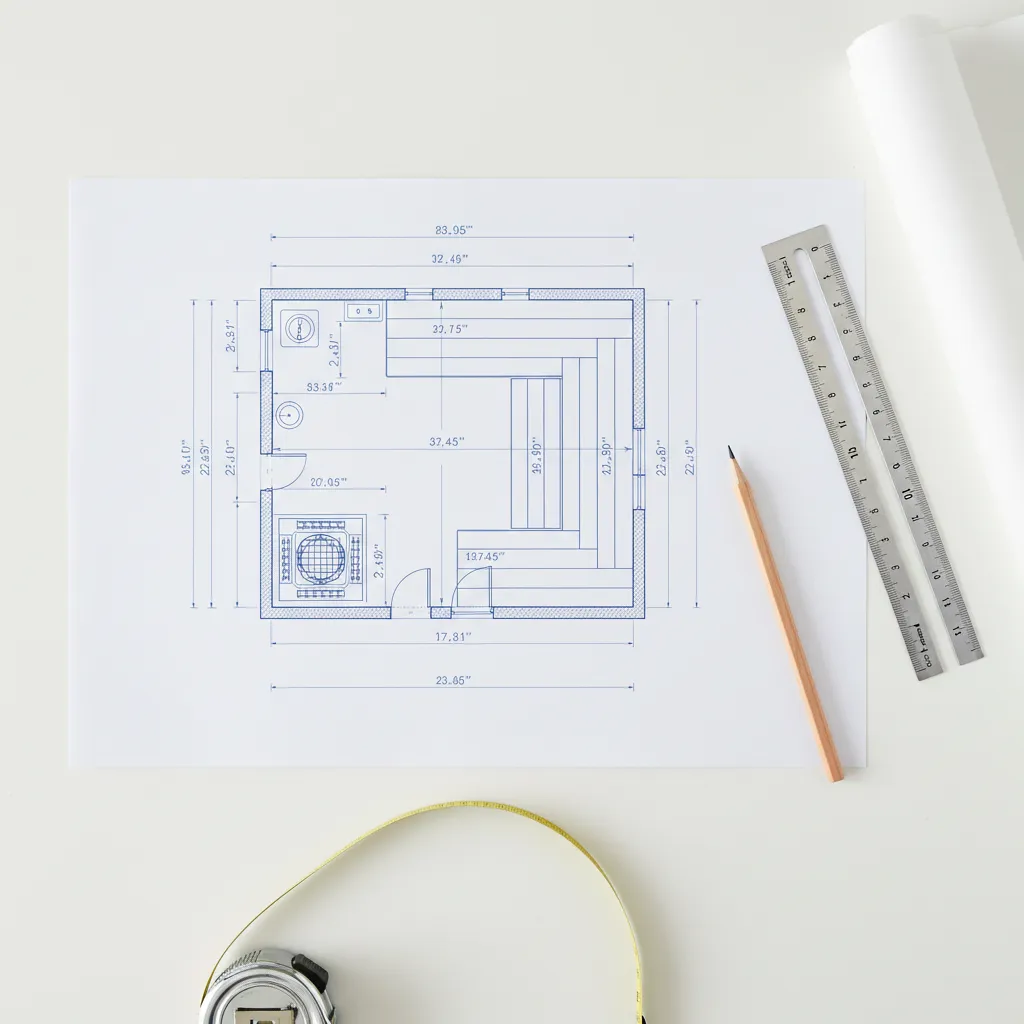
Home Sauna Size Guide: Dimensions, Ceiling Height, Room Planning
How big does a home sauna need to be? Minimum dimensions by capacity, ceiling height, bench depth, heater clearance, and why most '4-person' saunas fit two.
Quick answer: For most homeowners the right home sauna is 4 x 6 feet (24 square feet) of interior with a 7.5 to 8 foot ceiling: it seats two adults comfortably, heats in 20 to 30 minutes, and fits a spare bathroom or basement corner. A solo sauna works down to 3 x 4 feet, while four people realistically need 6 x 8 feet or more. Discount manufacturer capacity ratings by one or two people, since a labeled 4-person unit typically seats two comfortably.
Best for
Buyers planning where a home sauna will go and needing real dimensions for benches, ceiling height, heater clearance, and door swing.
Wrong fit
Owners of an already-installed sauna; sizing decisions are locked in at the planning stage.
Tradeoff
A bigger sauna feels generous on paper but heats slower and costs more to run, so size for your real weekly usage, not the dinner party you host once a year.
A sauna that is too small feels like a coffin. A sauna that is too big wastes heat and money. The sweet spot is smaller than most people expect.
This guide covers the real dimensions you need, not the inflated numbers manufacturers put on the box.
What you will learn:
Minimum dimensions for 1, 2, 3, and 4+ person saunas
Ceiling height rules that actually matter
Bench depth, door clearance, and heater spacing
Why manufacturer capacity ratings are fiction
How to convert an existing room into a sauna
Quick Reference: Sauna Sizes by Capacity
Here is the breakdown. These are comfortable dimensions, not the minimums printed in marketing brochures.
Capacity
Interior Size
Square Feet
Best For
1 person
3 x 4 ft
12 sq ft
Solo ritual, closet conversion
2 people
4 x 6 ft
24 sq ft
Couples, most popular home size
3 people
5 x 7 ft
35 sq ft
Small family, spare bathroom
4+ people
6 x 8 ft+
48+ sq ft
Entertaining, basement build
A few things to notice. The jump from 1-person to 2-person is significant. You need room for two people to sit without touching, with enough space to stretch legs. Going from a 3x4 to a 4x6 doubles the floor area.
For most homeowners, the 4x6 ft (2-person) size hits the sweet spot. Big enough to bring a partner or friend. Small enough to heat quickly and fit in a bathroom or basement corner.
Ceiling Height: Lower Than You Think
Standard room ceilings are 8 feet. That works fine for a sauna, but it is not ideal.
The rules:
7 feet is the practical minimum. Any lower and taller users feel cramped on the upper bench.
7.5 to 8 feet is the sweet spot for most home saunas.
Above 8 feet wastes energy. Heat rises, and every extra foot of ceiling height means your heater works harder to warm air you will never sit in.
The reason ceiling height matters: in a traditional sauna, the temperature difference between floor and ceiling can be 50-80°F. You want your head near the hottest air, not three feet below it.
If you are converting a room with 9 or 10 foot ceilings, consider building a dropped ceiling or raised platform to bring the upper bench closer to the heat pocket. This is one of the most common oversights in home sauna builds.
Bench Dimensions
Benches make or break a sauna. Get these wrong and every session feels awkward.
Bench depth (front to back):
18 inches is the minimum for sitting upright
24 inches lets you sit cross-legged or lean back comfortably
28+ inches allows lying down (you need at least 6 feet of bench length too)
Bench height:
Upper bench: 36-44 inches from the floor depending on ceiling height. This puts your head in the hottest zone.
Lower bench / footrest: 18-20 inches from the floor. Doubles as seating for kids or anyone who prefers less heat.
The two-tier rule: If your ceiling is under 7.5 feet, stick with a single bench level. Two tiers in a low-ceiling sauna means the upper bench is too close to the ceiling and the lower bench is in lukewarm air.
Heater Clearance Requirements
This is where people lose usable space. Every heater needs breathing room, and the clearance requirements are not suggestions. They are safety minimums.
Heater Position
Minimum Clearance
Sides of heater
4-6 inches to wall
Above heater
36-48 inches to ceiling
Front of heater
12-18 inches to bench/seating
Floor under heater
Non-combustible surface required
A wall-mounted heater saves floor space in small saunas. A floor-standing heater needs more room but heats more evenly in larger builds.
Check your specific heater model before finalizing your layout. Our heater sizing guide covers how to match heater output to room volume.
Door Size and Swing Direction
Sauna doors should always open outward. If someone feels faint inside, they need to push the door open, not pull it toward themselves while trying to move backward.
Standard sauna door dimensions:
Width: 24-28 inches (smaller than a normal interior door)
Height: 72-78 inches
A narrower door helps retain heat. You will lose a surprising amount of warmth through a wide door every time it opens. Glass doors look great and let light in, but they lose heat faster than insulated wood doors.
Why Manufacturer Capacity Ratings Are Wrong
A "4-person sauna" from most manufacturers means four adults can physically fit inside if they sit shoulder to shoulder on a narrow bench. Nobody wants that.
The real math: Take the manufacturer rating and subtract one or two. A "4-person" unit typically seats two adults comfortably with room to move. A "2-person" unit is really a solo sauna with a guest spot.
This is not a knock on the products. It is how the industry works. The same thing happens with tent ratings and boat capacity. The number on the label is maximum occupancy, not comfortable occupancy.
When shopping, focus on interior dimensions rather than the "person" rating. Measure your actual bodies. Sit on a bench that is 18 inches deep and see how it feels before committing.
Room Conversion Guide
Already have a space in mind? Here is how common room types translate.
Spare Bathroom (typical 5x8 ft)
Perfect for a 2-person sauna. You already have moisture-resistant walls, a drain, and likely adequate ventilation ducting nearby. Remove the tub or shower, add proper sauna ventilation, install your heater, and you have a legitimate home sauna. Budget for waterproofing and vapor barrier upgrades.
Walk-in Closet (typical 4x6 ft)
A tight but workable solo sauna. The challenge is ventilation and electrical requirements. Most closets share walls with bedrooms, so sound insulation matters too. Make sure you can get a 240V circuit to the space.
Basement Corner (flexible sizing)
The most popular conversion. Basements offer ceiling height, concrete floors (non-combustible), and usually enough room for a 6x8 ft build. Moisture management is the main concern. You need to keep sauna moisture from reaching basement walls where it can cause mold.
Garage Bay (flexible sizing)
Works well for outdoor-style builds. Insulation is the main challenge since garage walls are usually minimal. Plan for extra insulation and a dedicated heating circuit.
Ventilation Space Requirements
A sauna needs fresh air in and stale air out. This is not optional. Without proper airflow, you get stale air, uneven heat, and moisture problems.
Plan for:
Intake vent: Near the floor, close to the heater (usually 6-12 inches from the floor)
Exhaust vent: On the opposite wall, near the ceiling or at bench height
These vents need clear paths to outside air or an adjacent room. Add their footprint to your space planning. Our ventilation guide covers the full details.
Planning Checklist Before You Measure
Before you pick up a tape measure, answer these questions:
How many people will use it at once? Be realistic. If you say "four" but it will be mostly solo sessions, build for two.
Sitting or lying down? Lying down needs at least 6 feet of bench length and 28 inches of depth.
Indoor or outdoor?Outdoor saunas have more flexibility on size but need weather protection and foundation work.
What type of heater? Infrared panels need less clearance than traditional electric or wood-fired heaters. This affects your usable interior space.
Do you need a changing area? A small anteroom or bench outside the door keeps the experience smooth. Factor this into your total space budget.
Common Sizing Mistakes
Building too large. A bigger sauna takes longer to heat, uses more electricity, and often feels empty during solo sessions. Start with the smallest size that fits your real usage pattern.
Forgetting the door swing. That 4x6 interior becomes 4x5 of usable space if your door swings inward (which it should not, but people do it).
Ignoring bench layout. An L-shaped bench wastes less space than a straight bench in a square room. Plan bench placement before finalizing room dimensions.
Skipping electrical planning. Your dream sauna size means nothing if you cannot get the right electrical circuit to the space. Check this first.
Frequently Asked Questions
How big does a home sauna need to be?
A home sauna needs a minimum of about 12 square feet (3 x 4 ft) for one person. For two people, 24 square feet (4 x 6 ft) is the practical minimum for comfortable use. These dimensions allow proper bench depth, heater clearance, and room to move without feeling cramped.
What size sauna do I need for two people without feeling cramped?
The minimum comfortable size for a 2-person sauna is 4 x 6 feet (24 square feet) of interior space. This allows two adults to sit side by side on a bench that is at least 18 inches deep, with adequate clearance around the heater. Manufacturer-labeled "2-person" models that measure 3 x 4 feet are realistically solo saunas.
How tall does a sauna ceiling need to be?
A sauna ceiling should be between 7 and 8 feet high. Seven feet is the practical minimum for most adults sitting on the upper bench. The sweet spot is 7.5 to 8 feet, which keeps the hottest air close to your head without wasting energy heating unused space above you.
Sources
International Residential Code (IRC), Section R303 - Light, Ventilation, and Heating. Minimum room dimension and ventilation requirements for habitable spaces.
Harvia Sauna Heater Installation Guidelines (2024). Manufacturer-specified minimum clearances for wall-mounted and floor-standing sauna heaters.
Finlandia Sauna Products, "Sauna Room Planning Guide." Industry-standard bench depths, ceiling heights, and layout recommendations.
ASTM E84, Standard Test Method for Surface Burning Characteristics of Building Materials. Fire safety standards for interior sauna materials.
International Association of Plumbing and Mechanical Officials (IAPMO), Uniform Mechanical Code, Chapter 7. Ventilation requirements applicable to residential sauna installations.
The Bottom Line
For most people building a home sauna, a 4x6 foot interior with 7.5 foot ceilings is the right starting point. It fits two adults comfortably, heats in 20-30 minutes, and works in a spare bathroom, basement corner, or backyard shed.
Measure your space. Subtract heater clearance, bench depth, and door swing. What is left is your actual usable sauna. If two people can sit side by side with room to breathe, you have enough.
The best sauna is the one you use three times a week. Size it for that reality, not for the dinner party you might host once a year.
These guides are built from manufacturer documentation, public specifications, primary research where health claims matter, and repeated buyer questions that show up in real ownership and installation decisions.
Manufacturer responses can clarify pricing bands, warranty terms, support footprint, or common mistakes. They do not move a page up the shortlist on their own.