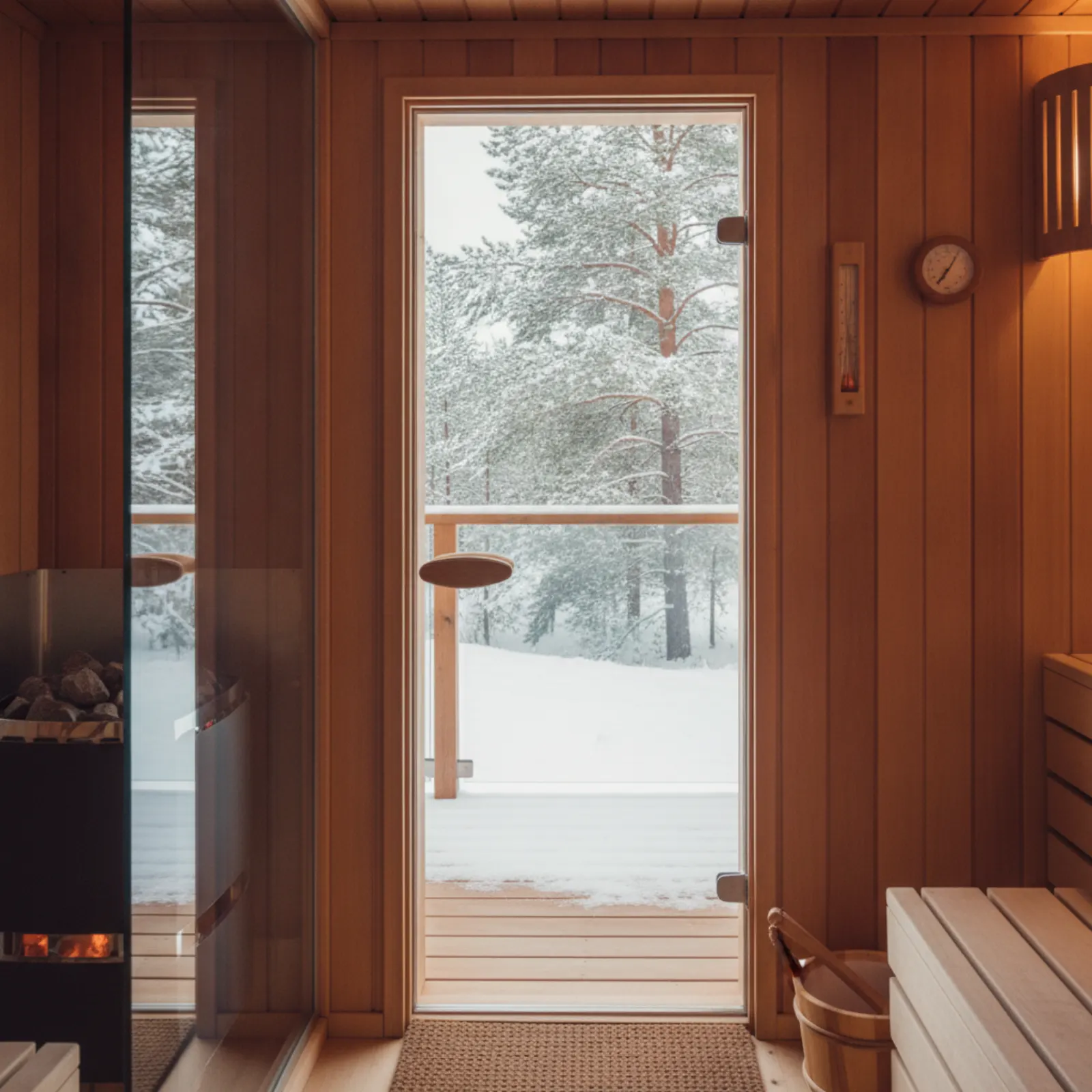
Sauna Door and Glass Safety Guide: What to Check Before You Buy
A home sauna buyer guide to doors and glass, including tempered glass, swing direction, clearances, heat loss, privacy, children, and quote questions.
Installation
Quick answer: Sauna doors and glass affect safety, heat loss, privacy, access, and daily use. Ask what glass is used, how the door swings, whether it latches safely, and how much heat the glass wall adds to the heater load.
Best for
Buyers comparing glass-front saunas, indoor kits, and family sauna layouts.
Wrong fit
Commercial spa design or code-specific glazing engineering.
Tradeoff
Glass looks clean and open, but more glass means more heat loss, less privacy, and more detail to get right.
Glass sells saunas. It is also the line on the quote buyers question least.
Here is the money side. A tempered glass sauna door typically retails in the $400 to $800 range. A full glass front adds a few thousand dollars to most kit quotes. The wrong glass costs more than either. Non-safety glass in a hot doorway breaks into cutting shards, and a shattered custom panel means weeks of waiting plus freight on an oversized fragile item.
Quick Answer
Check glass type, door swing, latch behavior, handle temperature, threshold, privacy, child access, and how much glass changes heater sizing. Every glass panel in or beside a sauna door should be certified tempered safety glass. More glass can be the right choice, but it is not free from comfort and safety tradeoffs.
The one spec that is not negotiable
In US homes, glass in and around doors is treated as a hazardous location. Building code requires safety glazing there, and the federal standard behind it is CPSC 16 CFR 1201, which tests whether glazing can take a body-weight impact without breaking dangerously. Tempered glass passes because it crumbles into small blunt pieces instead of shards.
For a sauna, that standard is the floor, not a premium feature. Look for the etched certification mark in the corner of the glass. It should reference 16 CFR 1201 or ANSI Z97.1. If the seller cannot tell you the glass type and thickness, usually 8 mm tempered for sauna doors, walk carefully. The credible manufacturers in our sauna brands directory publish this spec without being asked.
Door and glass checklist
Detail
Why it matters
Certified tempered glass
Breaks blunt, not sharp
Outward swing
Opens under the weight of a person who falls against it
No locking hardware
Users must always be able to exit
Magnetic or roller catch
Holds heat in, gives way under a push
Wooden handle
Metal hardware burns at sauna temperatures
Threshold design
Trip risk on the way out, when people are wobbliest
Glass area
Heat loss and heater sizing
Privacy
Real household use, not showroom use
Glass changes the heat calculation
A glass wall loses heat faster than an insulated cedar wall. That does not make glass wrong. It means the heater has to work against it, and a heater sized for an insulated room will feel weak in a glass-fronted one.
The sizing convention heater makers use is to treat glass as extra room volume. Our sauna heater size calculator has a field for glass area, so run your room with and without the glass front and look at the gap. A full glass door can push a small room up a whole heater size. If two quotes use the same heater but one has twice the glass, one of those rooms will disappoint, and the best sauna heater guide explains why fixing that after the build costs more than fixing it on paper.
Door swing is not a small detail
A sauna door should open outward with one push. No latch, no lock, no stiff mechanism. The standard hardware is a magnetic or roller catch that holds the door closed against heat loss but gives way when someone leans on it.
The failure mode this prevents is specific. Heat plus dehydration makes people lightheaded. If a dizzy person slumps against an outward-swinging door with a soft catch, the door opens and they land in cool air. An inward-opening door with sticky hardware turns the same moment into an emergency. This is why the sauna safety guide treats exit design as a safety topic, not a styling topic.
Operate the exact door hardware before you sign, not a rendering. If the showroom door already sticks, imagine it after two years of daily heat cycling.
Family use changes the risk
Children, guests, and rental users do not know your routine. Glass helps here. A full-view door means you can see a child or an overheated guest from outside without opening anything. If kids will use the sauna, pair that visibility with the ground rules in the sauna for kids guide. If the sauna is going into a short-term rental, the rental property sauna guide adds the liability layer.
Good design assumes tired, hot, and distracted people. Wooden handles, a low threshold, and glass you can see through are all versions of the same idea.
What to ask before you sign
Three questions, in writing:
What is the glass specification? Type, thickness, and certification mark. "Tempered, 8 mm, 16 CFR 1201" is a complete answer. "It is safety glass" is not.
What does a replacement door or panel cost, and how long does it ship in? Glass is the part most likely to break in transit or in year five. If the answer is a custom order from overseas, price that wait now.
Does the heater quote account for the glass area? Bigger glass means a bigger heater, and sometimes a bigger circuit. The heater clearance guide and the indoor installation checklist show what else moves when the heater does.
If a quote is vague on any of these, send it through our free quote review before you pay a deposit. Vague glass specs and undersized heaters are two of the most common gaps we flag.
Frequently Asked Questions
Is a glass-front sauna worse?
Not automatically. It looks open, shows off the interior, and works well in many builds. The tradeoffs are real: more heat loss, more heater capacity, less privacy, and more cleaning. Decide with those priced in, not discovered later.
Should a sauna door lock?
No. A sauna user should always be able to exit with one push. The correct hardware is a magnetic or roller catch. Lockable hardware on a sauna door is a defect, not a feature.
Does tempered glass matter?
Yes. It is the difference between glass that crumbles into blunt pieces and glass that breaks into shards, in a room where people are barefoot, hot, and sometimes dizzy. Look for the 16 CFR 1201 or ANSI Z97.1 mark etched in the corner of the panel.
Can I add glass later?
Usually not cheaply. Glass affects framing, door sizing, heater capacity, and layout. Retrofitting a glass front means rebuilding a wall, not swapping a panel, so make the glass decision before the room is designed.
These guides are built from manufacturer documentation, public specifications, primary research where health claims matter, and repeated buyer questions that show up in real ownership and installation decisions.
Manufacturer responses can clarify pricing bands, warranty terms, support footprint, or common mistakes. They do not move a page up the shortlist on their own.
Health and safety pages are written conservatively. When the safer answer is to slow down, get clearance, or skip the heat, that is the answer we give.